
Traffic from ChatGPT converts at 14.2%. Standard Google organic? 2.8%. That gap isn’t a rounding error – it’s a channel that closes deals at a fundamentally different rate from everything your team has spent the last decade optimizing for.
AI search visits grew 42.8% year over year between Q1 2025 and Q1 2026. Google’s growth over the same window: 2.4%. The gap keeps widening. Yet most marketing teams still have zero tools tracking whether they show up in AI-generated answers at all.
That’s the AEO problem. Answer engine optimization isn’t a “watch this space” category anymore. It’s a gap in your current AI search visibility stack — one that’s already costing you citations while your competitors rack them up.
What Is Answer Engine Optimization (AEO)?
Answer engine optimization is the practice of structuring content so AI engines – ChatGPT, Perplexity, Google AI Overviews, Gemini — cite it directly when generating responses.
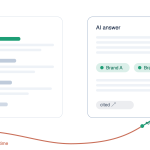
Traditional SEO earns you a ranking position. AEO earns you a citation inside the answer itself. When a user asks ChatGPT which project management tools work best for remote teams, ChatGPT synthesizes an answer and attributes sources. You’re either one of those sources, or you’re invisible. There’s no equivalent of “ranking fifth” – AI answer engines don’t surface ten blue links.
Google AI Overviews now appear in 13–25% of search queries. That percentage trends higher for commercial and informational terms, exactly where most B2B and e-commerce content competes.
The signals AI engines care about differ from what Google’s crawler rewards. They favor content clarity, factual accuracy, direct answers, and entity coverage. Not keyword density or anchor text ratios. If your page resolves a question clearly and can be trusted, an AI engine is far more likely to cite it than a page that ranks #1 but buries the answer behind three paragraphs of intro fluff.
Some practitioners call this generative engine optimization (GEO). Others use AEO. The day-to-day work is identical.
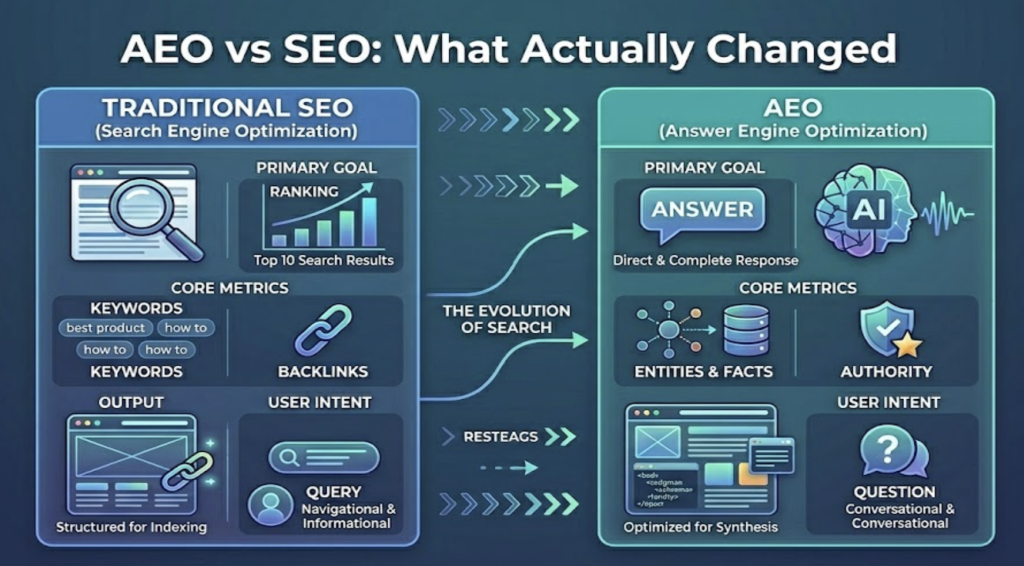
AEO vs SEO: What Actually Changed
SEO’s job is to earn rankings. Target keywords, build backlinks, drive clicks. It works because Google shows ten links and users choose.
AEO’s job is to earn citations. Build topic authority, structure content for direct extraction, and influence decisions before any click happens. It works because AI engines synthesize one answer and attribute one source. One.
Gartner projected traditional search engine volume would drop 25% by 2026 as users shift to AI assistants and virtual agents for discovery tasks. That shift doesn’t kill SEO — AI engines still pull from well-ranked content, so your SEO foundation feeds AEO. But ranking first in Google doesn’t guarantee you’re in the AI summary sitting above the blue links. That’s a separate optimization layer with its own signals.
Simplest frame: SEO gets you on the page. AEO gets you in the answer.
LLMs don’t just check whether your content mentions the right words. They evaluate whether your page actually resolves a question with specificity and authority. “Best CRM tools for small businesses” is generic. “Best CRM tools for service businesses managing under 500 contacts” is the kind of answer-first specificity AI engines recognize as a credible source worth citing.
Unlike standard organic traffic, AI brand mentions are measurable. You can track share of voice across AI platforms, monitor brand sentiment in AI-generated responses, and catch when a competitor starts winning citations you used to hold. If you’re also thinking about organic search traffic in this picture, the two feed each other more than most teams realize.
Why AEO Tools Matter Right Now?
The numbers make the urgency obvious.
AI search visits grew from 15.6 billion to 27.4 billion between Q1 2025 and Q1 2026. Semrush research puts AI search visitors at 4.4x more valuable than the average traditional organic visitor – they arrive having already consumed a synthesized comparison, so they’re further along in the decision process.
Then on May 7, 2026, ChatGPT changed how brand links surface – clickable callouts appeared directly inside answers instead of tucked in footnotes. Referral traffic jumped 157.7% week over week. Homepage referrals specifically surged 354.7%. That’s not a slow trend – it happened immediately.
Without LLM citation tracking tools, you have no way to know if you’re appearing, what the AI says about you when you do, or which competitors are quietly dominating your category. You’re managing a high-value channel entirely on instinct.
How AEO Tools Work (The 3 Job Categories)?
Most roundups treat AEO tools as one undifferentiated bucket. They’re not.
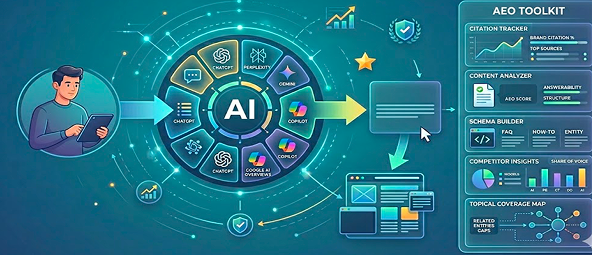
The platforms available break into three distinct job categories. Picking the wrong category for your situation doesn’t just waste money – it leaves the actual problem unfixed.
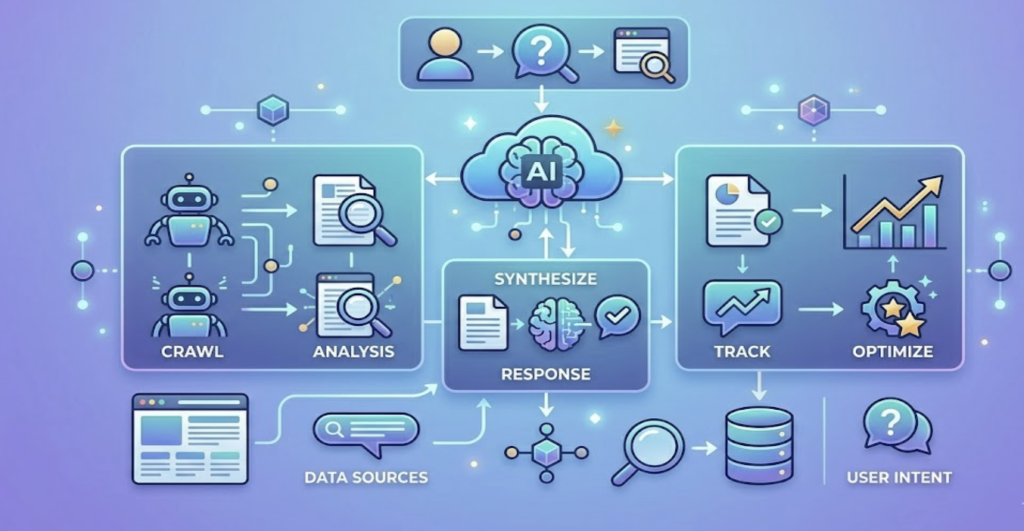
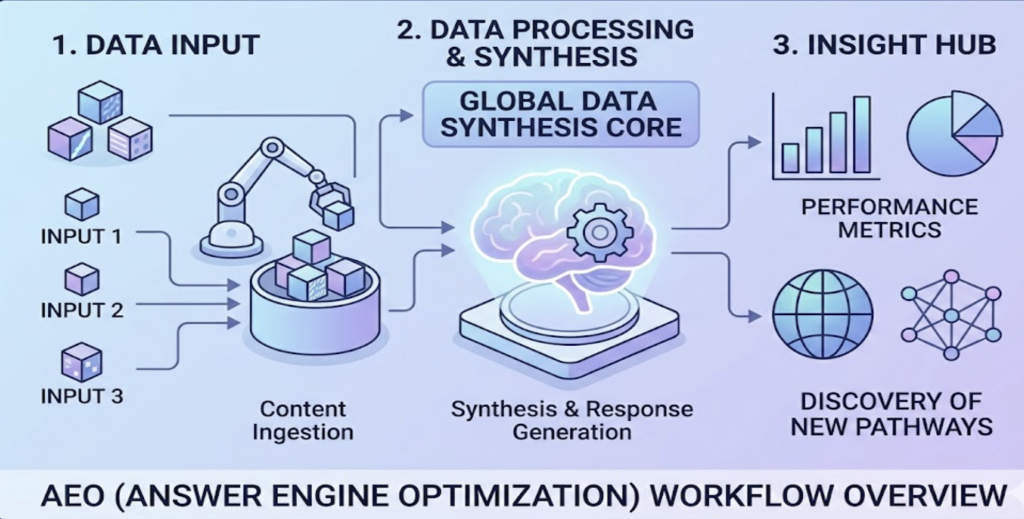
1. Monitoring tools track where and how often your brand gets cited in AI-generated answers. They run prompts against AI engines, record whether you appear, and surface sentiment and competitor citation data. The measurement layer.
2. Content optimization tools analyze your existing pages and restructure them for better answer extractability. They flag pages that bury the answer, suggest FAQ and Speakable schema, and score content against AEO citability criteria. The improvement layer.
3. Technical and all-in-one platforms combine monitoring, content guidance, and technical SEO health into a single dashboard. Enterprise teams gravitate here. Smaller teams often do better starting with a focused monitoring tool and expanding later.
One thing any serious platform should handle: prompt variance. Run the same prompt twice in ChatGPT and you may get different citations. Any tool that runs a single prompt pass is presenting noise as signal – the reliable ones run multiple passes per query and average results. Ask this directly before you commit to anything.
The best platforms also close the action loop: gap discovery → content brief → publish → verify. Tools that stop at the dashboard generate reports that sit unused. That’s the single biggest differentiator worth asking about in any demo. If you’re also wondering how to make your pages more crawlable and indexable in the first place, the llms.txt guide is worth a read – it’s the technical file that tells AI engines what to access on your site.
Best AEO Tools in 2026 (By Job Category)
The AEO tool market barely existed two years ago. Today there are dozens of platforms ranging from $29/month entry-level trackers to $5,000+ custom enterprise contracts. Here’s where each fits.
Monitoring Tools: Track Where You’re Being Cited
Otterly.AI: Best entry point ($29/month)
The most accessible way to test whether AI answer monitoring is worth investing in before committing to a bigger platform. The Lite plan tracks ChatGPT, Perplexity, Google AI Overviews, and Microsoft Copilot for 15 prompts per month.
Clean interface. Fourteen-day free trial, no credit card required. For a solo marketer or small team asking “are we even showing up?”, this answers the question. Gemini and Google AI Mode are paid add-ons if you need them.
Profound: Enterprise category leader ($399–$5,000+/month)
Profound is the G2 category leader for enterprise AI visibility, and for good reason: it covers more AI surfaces than anything else on this list — 10+ platforms from the Growth plan.
The caveat is real, though. It’s built for large teams and Fortune 500 use cases, with multi-week onboarding and sales-led contracts. If your team genuinely needs 10-engine coverage and has compliance requirements? Profound is the standard. If you’re a 25-person company? You don’t need it yet.
SE Ranking SE Visible: Best unified SEO + AEO
Teams already using SE Ranking for traditional SEO have the most efficient path to AEO monitoring through SE Visible. No second subscription, no context-switching, unlimited users, and 13+ years of historical SEO context already baked in.
The platform covers ChatGPT, Perplexity, Google AI Overviews, and Gemini. For teams that need SEO and AEO without paying for two enterprise contracts, SE Ranking consolidates both.
Content Optimization Tools: Make Your Pages More Citable
Surfer SEO + Frase
Neither was built specifically for AEO, but both improve the content quality signals AI engines prioritize.
Surfer scores pages against NLP criteria and flags topic coverage gaps. Frase specializes in answer-first structuring: content that opens with a direct answer, clean H2/H3 hierarchy, FAQ sections built for schema markup for AEO. For pages that rank fine in Google but get ignored by AI engines, Frase usually surfaces the structural problem fast.
Best for: content teams who want to fix underlying page citability before spending on monitoring tools. A content audit is often the fastest way to find those pages at scale.
Writesonic GEO
Built specifically for generative search. Writesonic GEO generates answer-structured content and scores it against AEO criteria as you write – useful for teams producing at volume who want AEO standards baked in from the start rather than retrofitted.
Technical + All-in-One Platforms
Conductor
Conductor combines AEO tracking, traditional SEO intelligence, content creation, and site health monitoring in one enterprise platform. The AgentStack module extends into agentic workflows – useful for companies thinking beyond chatbot visibility toward AI-agent referrals.
For enterprise SEO teams that want to consolidate tools rather than add more, Conductor is the most complete option. Pricing is custom and sales-led.
Ahrefs Brand Radar
Already an Ahrefs user? Brand Radar adds AI visibility tracking directly on top of the authority and backlink data you’re already working with. Not the deepest AEO feature set available, but zero additional learning curve and no new platform to manage. The right move for SEO-first teams making a first step into AEO without disrupting their existing workflow.
What to Look For Before You Buy?
Most AEO tools look similar in a product demo. The real differences emerge when you ask specific questions.
- Surface coverage: Minimum viable: ChatGPT, Google AI Overviews, and Perplexity. Those three cover the majority of AI search demand. Anything tracking fewer surfaces is a partial solution – fine for testing, not for a production setup.
- Prompt variance handling: Does it run multiple passes per prompt and average the results? If the answer is vague or involves running each prompt once “very carefully,” that’s a no. Citation data from a single pass isn’t reliable enough to base decisions on.
- Action loop depth: After it finds a gap, what happens? If the output is a dashboard with no path to content briefs or recommendations, the reports will sit unused. The workflow connection matters as much as the data itself.
- Seat pricing: Several platforms charge per seat – affordable for one user, expensive when a team of six triples the listed price. Always calculate at your actual team size.
- Free trial: Most serious platforms offer one. Otterly gives 14 days, no credit card. AthenaHQ offers a discounted first month. Test before you pay.Worth knowing: structural changes to existing pages, adding answer blocks, FAQ sections, cleaner header structure – can show up in AI citations within a few weeks of being recrawled. That’s faster than most traditional SEO changes. If you start monitoring and fixing pages at the same time, you’ll see signal quickly enough to know whether the investment is worth continuing. Knowing which pages are already losing momentum before you rebuild for AEO saves a lot of wasted effort.
FAQs
Generative engine optimization (GEO) refers specifically to optimizing for generative AI systems like ChatGPT and Perplexity. AEO is the broader term – historically it covered all answer-format outputs including voice assistants and featured snippets. In practice, the tools and tactics overlap almost completely in 2026. Most practitioners use the terms interchangeably, and the tools built for one work for the other.
Faster than most people expect. Structural updates – FAQ sections, cleaner H2/H3 structure, direct answer blocks – can appear in AI citations within a few weeks after a page is recrawled. Schema markup changes can be validated sooner. That said, AI responses are probabilistic, not deterministic. Track results over a 30-day window rather than checking the day after publishing.
Yes. AI engines source heavily from content that ranks well in traditional search. Your SEO authority feeds your AEO visibility – a page that earns no organic trust is unlikely to earn AI citations either. AEO is an additional optimization layer, not a replacement. The brands winning in 2026 are doing both.
Otterly.AI at $29/month is the most accessible paid entry point with real coverage across four AI platforms, and the 14-day free trial requires no credit card. Before paying anything at all, run manual checks – query ChatGPT and Perplexity with 10 prompts relevant to your category and note whether your brand appears. That free baseline tells you exactly how urgently you need a monitoring tool.