
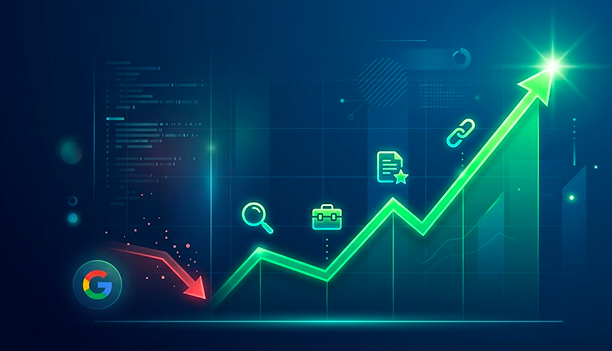
You opened Google Search Console on a Monday morning and felt the floor drop out from under you. Pages that ranked comfortably in the top three are now sitting at position 18. Traffic you spent years building is gone overnight. No warning, no manual action notice, no explanation just a cliff edge in your analytics where your rankings used to be. If this sounds familiar, you’ve been hit by a Google core update. And you’re not alone. Just know that you can recover the lost rankings after a Google Core Update!
The March 2026 core update, the most volatile Google has ever released, shifted 80% of top-3 results across the web. Only 20.5% of top-3 URLs held their exact position. Nearly a quarter of pages that sat comfortably in the top 10 fell out of the top 100 entirely. The December 2025 update before it hit 40–60% of sites across every major category.
The good news is that lost rankings after a Google core update is not a penalty. Google hasn’t flagged your site as spam. Your domain hasn’t been blacklisted. What happened is a recalibration – Google reassessed how well your content serves users compared to everything else competing for the same queries, and someone else’s content came out ahead. That’s actually a more hopeful situation than a penalty, because the fix is the same thing you should be doing anyway: making your content demonstrably better, more trustworthy, and more useful than what’s currently outranking you. This guide walks you through exactly how to do that – step by step, in the right order, without the panic-driven mistakes that make things worse.
What Is a Google Core Update?
A Google core update is a broad, significant change to how Google’s ranking algorithm evaluates content quality across billions of pages. Unlike targeted updates – spam updates, link spam updates, product review updates – core updates don’t target specific violations. They recalibrate the entire ranking formula.
The key phrase to internalize: you didn’t get worse. Other content just got reassessed as better.
Core updates typically focus on:
- Content quality and helpfulness: Does your page genuinely answer the query, or does it summarize what’s already ranking?
- E-E-A-T signals: Experience, Expertise, Authoritativeness, and Trustworthiness. These used to mainly affect health and finance content. Post-2025, they apply to virtually every category including SaaS reviews, how-to guides, and ecommerce comparisons. For SaaS companies in particular, demonstrating E-E-A-T often means anchoring your content in real product depth — platforms like Enerpize, a cloud accounting and business management solution trusted by 40,000+ businesses, are a strong example of grounding topical authority in verifiable product breadth.
- Topical authority: Google increasingly evaluates sites at the domain level. A site covering 10 unrelated topics shallowly now fares worse than one covering 2 topics deeply.
- User satisfaction signals: Dwell time, scroll depth, pogo-sticking (users bouncing back to search results immediately), and return visit rates all carry more weight than before.
- Core Web Vitals: Sites with an LCP (Largest Contentful Paint) above 3 seconds lost an estimated 23% more traffic than faster competitors in the March 2026 update.
Google releases major core updates every 3 to 4 months. In 2025 alone there were three: March, June, and December. The March 2026 update completed on April 8. Based on Google’s pattern, the next one is expected around June or July 2026, which means the window to recover before it hits is now.
One more critical point: Google confirmed in late 2025 that smaller, unannounced core updates run continuously between the major confirmed events. This means improvements you make today can be recognized before the next big update, not just during it.
Step 1: Confirm the Drop Is Real and Identify Its Source
Before doing anything else, verify that what you’re seeing is a genuine, update-driven ranking loss not a data anomaly, tracking error, or unrelated technical issue.
Check Google Search Console first, not your rank tracker. Rank trackers can show volatility that doesn’t show up as actual click loss in GSC. Open GSC, go to Performance → Search results, set your date range to compare the two weeks before and after the update rollout.
For the March 2026 update, compare March 15–26 vs. April 1–12. Look for:
- Pages with a significant drop in clicks (15–30%+)
- Pages where average position worsened by 3+ spots
- Pages where impressions dropped (lost relevance or ranking footprint)
- Pages where CTR fell while impressions stayed flat (SERP layout changed : AI Overviews, featured snippets, or more ads absorbed your clicks)
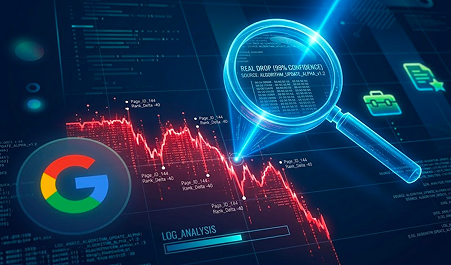
Determine the scope of the damage:
- Is it your entire site, or specific pages?
- Is it concentrated in one topic cluster or spread across everything?
- Did rankings drop on a specific date that aligns with a confirmed update?
Cross-reference your drop date against Google’s confirmed update calendar on the Google Search Status Dashboard. If your traffic fell within 1–2 days of a confirmed core update, that’s almost certainly the cause. If the drop doesn’t align with an update date, you’re likely looking at a technical issue, a competitor surge, or a manual action and the recovery steps are different.
Note: If you saw a dramatic drop on September 15, 2025 specifically, that was a documented Google Search Console reporting glitch, not an algorithm change.
Step 2: Wait for the Rollout to Complete
This is the step most site owners skip in a panic and it matters.
Google advises waiting at least one week after a rollout completes before drawing firm conclusions or making major changes. Rankings fluctuate significantly during the rollout period as the update propagates across Google’s data centres. Pages that look decimated on day 3 sometimes stabilise closer to their original position once the dust settles.
The March 2026 core update rolled out from March 27 to April 8 – twelve days. Making significant content changes during that window means you’re working with a moving target.
Once the rollout is confirmed complete on the Google Search Status Dashboard, you have a stable picture to diagnose from. Start your recovery work then.
Step 3: Diagnose Why Each Page Lost Rankings
This is the most important step and the one most recovery guides rush past. Making changes without understanding why you lost is how you waste weeks on fixes that don’t move the needle. If you’re serious about learning how to recover from a google core update, this is the stage where you uncover the real reason your rankings dropped.
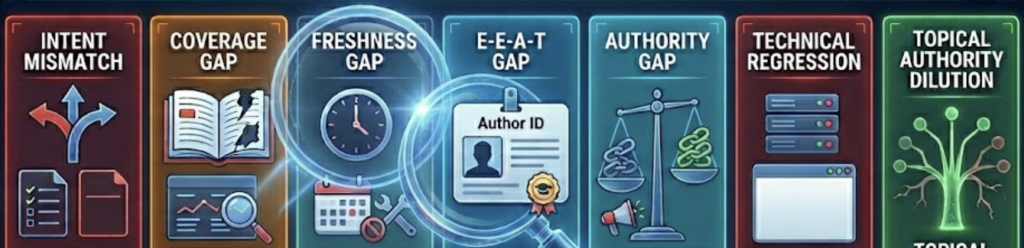
For each page that lost significant rankings, assign one primary decay reason:
Intent Mismatch
The SERP changed. Google now interprets the query differently and rewards a different content format — a listicle where you have a guide, a comparison where you have a how-to, a quick answer where you have a long-form essay. Check the current top-3 results and compare their format to yours.
Coverage Gap
Your page is missing entities, subtopics, or sections that top-ranking competitors now include. Open Ahrefs’ Content Gap or Semrush’s Topic Research, compare your page against the current top-5 results, and identify what they cover that you don’t.
Freshness Gap
Your content contains outdated statistics, deprecated tools, old screenshots, or recommendations that no longer reflect the current state of your topic. Google’s systems have become more sophisticated at detecting content that reads as accurate but contains stale information.
Many of the patterns behind a core update drop are actually signs of long-term content decay – [learn how to find and fix it here!]
E-E-A-T Gap
Your page lacks visible signals of real-world experience and expertise. No named author, no author credentials, no first-hand examples, no original data or research. Post-2025, these signals matter across almost all content categories — not just health and finance. Industry tracking shows 73% of top-ranking pages in competitive categories now display detailed author credentials.
Authority Gap
Competitors gained significant new backlinks or brand mentions since you last competed for the query. Your page’s relative authority declined not because you lost links, but because others gained more.
Technical Regression
A CMS update, template change, or deployment introduced a technical issue: a noindex tag accidentally added, canonical tags broken, internal links removed, structured data missing, or page speed degraded. These are often invisible in content audits but show up clearly in technical crawls.
Topical Authority Dilution
Your site publishes across too many unrelated topics shallowly. Google now penalises domain-level topic sprawl and rewards sites that demonstrate genuine depth across a focused cluster of subjects.
Step 4: Prioritise What to Fix First
Not all lost rankings are equally recoverable, and not all pages deserve equal effort. Before refreshing every page that dropped, build a prioritised recovery queue.
Score each affected page on three dimensions (Low / Medium / High):
| Dimension | What to Assess |
| Traffic & Revenue Impact | How much traffic did this page drive before? Does it convert? |
| Recovery Confidence | Is the decay reason clear and fixable, or is the SERP dominated by mega-authority sites? |
| Competitive Gap | How much better is the current top-ranking page than yours? |
Pages scoring High on impact and confidence but with a manageable competitive gap are your first priority — these are the quick wins that justify immediate effort.
Pages that lost rankings on queries now dominated by sites with domain authority 90+ (think Forbes, HubSpot, major government sites) are not quick wins. Deprioritise them and focus your effort where recovery is actually achievable.
Build a tiered refresh backlog:
- Tier 1 (fix this week): Top revenue pages with clear, fixable decay reasons – intent mismatch, freshness gaps, missing sections.
- Tier 2 (fix this month): Supporting pages, topic cluster articles, and pages with authority gaps that need content improvement alongside link outreach.
- Tier 3 (monitor): Pages with minor drops that may self-correct as the update settles, or pages where the competitive landscape has shifted fundamentally.
Step 5: Refresh Your Content – The Right Way
This is where most recovery attempts go wrong. Teams either make cosmetic changes that Google ignores (updating the publish date, tweaking a meta description) or rewrite everything at once with no way to measure what worked. Understanding how to recover from a google core update means making targeted improvements based on what changed in the SERP, not guessing.
Fix Intent Mismatch
Restructure the page to match the format Google is currently rewarding. If the top results are now listicles, reorganise your content around numbered items with clear headers. If the top results are quick-answer guides, move your key answer above the fold instead of burying it after 800 words of context.
Fill Coverage Gaps
Add the missing sections, entities, and subtopics that competing pages include. Don’t pad! Every addition should genuinely serve the reader. Use tools like SEOBoost, Clearscope, or Surfer SEO to identify the specific NLP terms and entities that top-ranking pages include and yours doesn’t.
Fix Freshness Gaps
Update every statistic with a current source. Replace outdated screenshots and tool references with current versions. If your post references something from 2022 as current, update it. Add a “Last Updated” date that reflects a genuine, meaningful refresh – not a cosmetic timestamp change.
Strengthen E-E-A-T Signals
Add a named author with visible credentials. Include first-hand examples – real scenarios, real results, real data from your own experience or your users’. If you have original research, survey data, or proprietary insights, surface them prominently. These are the signals Google’s March 2026 update rewarded most decisively: content that couldn’t have been written by anyone without genuine, specific experience in the topic.
Improve User Experience Signals
Break up long walls of text. Add comparison tables for content where readers are evaluating options. Include an FAQ section with direct, concise answers to secondary questions. Use headers that mirror actual user questions. These are the structures that both Google and AI systems extract answers from most easily.
Don’t Rewrite Everything at Once
Make changes in modules (one section at a time) and annotate what you changed and when. This makes it possible to attribute ranking movement to specific improvements, which is how you build a recovery playbook rather than just hoping something works.
If you want a fast-start execution plan, these [6 low-hanging content refreshes can recover up to 20% of your lost traffic within 30 days].
Step 6: Fix Technical Issues in Parallel
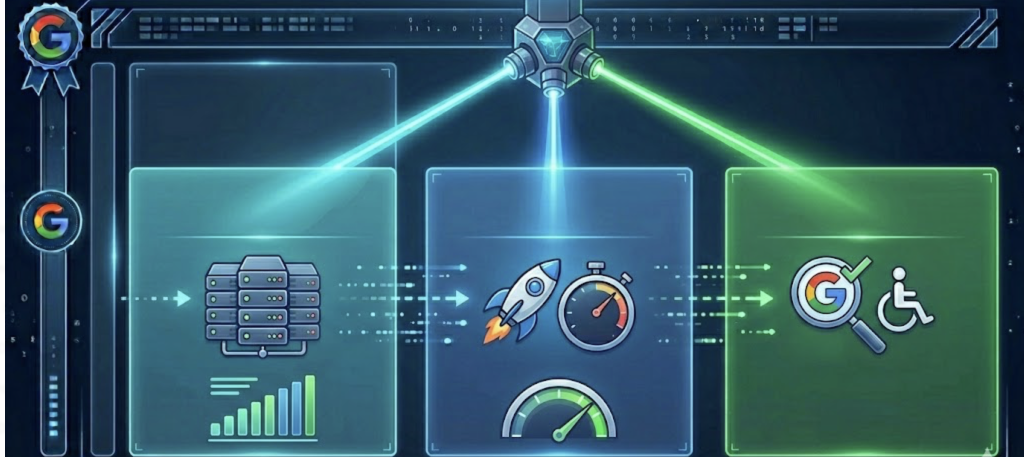
While content improvement is the primary recovery lever after a core update, technical issues can prevent your refreshed content from being crawled, indexed, or fully evaluated. Run a technical audit on your affected pages immediately.
Priority technical checks:
- Crawlability and indexation: Are your updated pages being crawled and indexed? Check coverage reports in GSC and submit updated URLs for indexing after refreshes.
- Core Web Vitals: LCP above 3 seconds is a measurable disadvantage in 2025–2026 updates. Check your CWV scores in GSC → Core Web Vitals and PageSpeed Insights. Slow templates drag down your entire domain, not just individual pages.
- Internal linking: Are your refreshed pages receiving adequate internal links from relevant, high-authority pages on your site? Strengthening internal link structure is one of the fastest ways to redistribute link equity and signal page importance to Google.
- Canonical tags: Verify that canonical tags are pointing to the correct versions of your pages, particularly after any recent site changes or migrations.
- Mobile usability: Google uses mobile-first indexing. Content pushed below the fold by interstitials, ads, or pop-ups on mobile creates user experience signals that work against you.
Use Screaming Frog or a monitoring tool like ContentKing to catch any technical issues that may have been introduced during recent updates- template changes, CMS upgrades, or deployment errors often introduce silent regressions that only show up in a crawl.
Step 7: Monitor Rankings and AI Visibility Post-Refresh
Once you’ve published your refreshes, the temptation is to check rankings daily and expect immediate movement. Resist it.
Google needs to recrawl and reprocess your pages. Technical fixes can show results in 1–2 weeks. Content improvements typically take 4–8 weeks. Recovery from a core algorithm update can take until the next major update – expected around June or July 2026 and sometimes requires multiple update cycles.
Track these metrics after each refresh:
- Clicks and impressions in GSC (compare 28 days post-refresh vs. 28 days pre-refresh)
- Average position for the page’s primary keyword set
- CTR – if position recovers but CTR stays low, your title tag or meta description may need improvement
- Conversions – traffic recovery without conversion recovery signals a remaining intent mismatch
Also track AI visibility. Recovering rankings in traditional Google results is only part of the picture in 2026. Google AI Overviews now appear for an estimated 15–20% of queries, and the pages they cite don’t always match what ranks in blue-link results. Tools like Ahrefs’ Brand Radar, Semrush’s AI Visibility Toolkit, and Keyword.com’s AI Overview Tracker let you monitor whether your content is being surfaced in AI-generated answers – a signal that will only grow in importance.
Step 8: Use WordPattern to Automate Decay Detection and Recovery
The most common reason sites keep losing rankings after core updates isn’t that their content is bad. It’s that they can’t see the decay coming fast enough to act on it. If you want a scalable system for how to recover from a google core update, automation helps you catch losses before they become traffic disasters.
By the time you notice a traffic drop in your monthly analytics review, you’ve already lost weeks of rankings and your competitors have already moved into the gap.
WordPattern monitors your Google Search Console data continuously, identifying patterns of decline like losing 2 positions per week — before they become traffic disasters. Its 90-day trend analysis detects the consistent downward signals that human eyes miss across large content libraries. When decay is detected, it performs paragraph-level analysis to identify exactly which sections of your content are dragging your rankings down, then generates AI-powered refresh drafts that add the specific semantic entities and Word Patterns that Google is currently rewarding in top-ranking results.
For core update recovery specifically, WordPattern maps your ranking volatility against Google update windows – separating genuine algorithmic decay from normal fluctuation – so you know exactly which pages need attention and which are just experiencing temporary noise.
The result: instead of a month-long manual audit scramble after every core update, you have a continuously updated refresh queue that tells you what to fix, why, and what to change at the paragraph level.
Common Mistakes That Make Recovery Slower
Changing everything at once
Making sweeping changes across your entire site simultaneously makes it impossible to attribute any ranking recovery to specific improvements. Work in batches. Annotate what changed and when. Measure the impact before moving to the next batch.
Refreshing the publish date without refreshing the content
Google evaluates content freshness based on whether the information is actually current — not whether the date at the top says it is. A cosmetic timestamp update with no substantive change signals low quality, not freshness.
Panicking and deleting pages
Core update drops are not penalties. Deleting pages and redirecting them removes any residual link equity those pages hold and eliminates any chance of recovery. Unless a page is truly zero-quality with no strategic value, consolidation or refresh is almost always better than deletion.
Waiting for Google to fix it
A core update is not a bug. Google won’t roll it back or issue a correction. If your content lost rankings, it’s because the algorithm now considers other content better for that query. The only path to recovery is improving your content to a standard where Google agrees with you again.
Rebuilding with the same approach that got you penalised
If your site lost rankings because of thin, AI-generated content lacking genuine expertise, refreshing that content with more AI-generated text won’t help. What the March 2026 update rewarded was content that couldn’t have been produced by anyone without real, specific experience in the topic. That’s the bar you’re now competing against.
How Long Does It Take to Recover Lost Rankings after a Google Core Update?
There’s no universal answer, but here are realistic benchmarks based on March 2026 data and recovery patterns:
| Decay Type | Typical Recovery Timeline |
| Technical fixes (indexing, Core Web Vitals, canonicals) | 1–2 weeks after Googlebot recrawls |
| Content freshness updates (stats, screenshots, examples) | 2–4 weeks |
| Coverage gap fixes (new sections, missing entities) | 4–8 weeks |
| E-E-A-T improvements (author signals, original research) | 6–12 weeks |
| Full topical authority rebuild | Multiple update cycles (3–6 months+) |
| YMYL and high-competition category recovery | 6–12 months |
The faster you act after a confirmed update rollout, the more likely your improvements are recognised before the next major update window. Teams that wait until the traffic drop becomes undeniable lose that advantage entirely.
Frequently Asked Questions
No. A core update is a recalibration of how Google evaluates content quality – not a penalty for a specific violation. There is no manual action, no notification, and no specific “wrong” thing your site did. Your content was assessed as less relevant or less helpful than competing content. The fix is improvement, not remediation.
Not entirely. Google confirmed that smaller, unannounced core updates run continuously between major confirmed events. Improvements you make now can be recognised before the next big update. That said, full recovery from a major ranking drop often does require a subsequent core update to fully manifest, particularly for YMYL and high-competition categories.
Not inherently. Google’s John Mueller stated clearly: “Our systems don’t care if content is created by AI or humans. What matters is whether it’s helpful for users.” What the March 2026 update penalised was mass-produced AI content lacking human expertise, original examples, or first-person perspective, content that reads fluently but adds nothing a reader couldn’t get from any other page.
The March 2026 update rolled out from March 27 to April 8. Compare your GSC performance for March 15–26 vs. April 1–12. If significant drops appear in that window and align with that date range, the March update is almost certainly the cause. If drops appeared in late December 2025, the December 2025 update is the likely culprit.
Open Google Search Console. Identify the 5 pages that lost the most clicks. For each one, compare it to the current top-3 results for its primary keyword. Identify the single biggest gap – missing section, outdated data, intent mismatch, E-E-A-T signal — and fix that first. Then connect your GSC to WordPattern to automate continuous decay monitoring so you never have to start from zero again.
Final Thoughts
Recovering lost rankings after a Google core update is not a sprint and it’s not a mystery. It’s a systematic process: confirm the drop, diagnose the cause, prioritise the highest-impact pages, make substantive improvements tied to specific decay reasons, and monitor the results over weeks and not days.
The sites that recover fastest from core updates are not the ones that panic and rewrite everything. They’re the ones with systems in place – continuous monitoring, clear prioritisation, and a refresh process that responds to decay signals early, before rankings drop far enough to matter.