
Search intent is no longer static. What users wanted yesterday may not match what they expect today. As algorithms evolve and user behavior shifts, content that once ranked well can quickly become irrelevant. That’s where predicting search intent shifts with AI becomes a game-changer.
In this guide, you’ll learn how AI identifies outdated answers, why intent changes over time, and how you can stay ahead of competitors by adapting faster.
Why Search Intent Keeps Changing?
Search engines constantly refine how they interpret queries. At the same time, users become more specific, informed, and demanding. As a result, search intent evolves due to several factors:
- New technology trends (e.g., AI tools replacing traditional methods)
- Changes in user behavior (mobile-first, voice search)
- Updated industry standards
- Fresh data or new discoveries
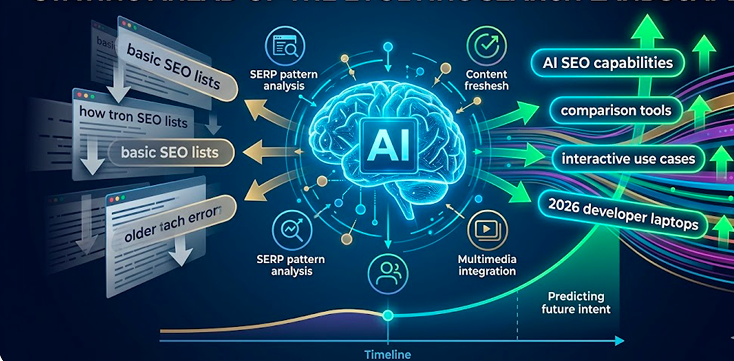
For example, a query like “best SEO tools” once returned basic lists. Now, users expect comparisons, pricing, AI capabilities, and real-world use cases.
What Happens When Content Becomes Outdated?
When your content no longer matches intent, several things happen quickly:
- Rankings drop
- Click-through rates decline
- Bounce rates increase
- Competitors take your position
Even if your article is technically correct, it can still fail if it doesn’t match what users currently expect.
How AI Detects Outdated Answers?
Artificial intelligence doesn’t just analyze keywords anymore – it understands patterns, behavior, and intent shifts at scale.
1. SERP Pattern Analysis
AI tracks changes in search engine results pages (SERPs). If top-ranking pages suddenly shift format – like moving from blog posts to videos or tools – it signals a change in intent.
Example:
A keyword that once ranked listicles now shows product pages or comparison tools.
2. Content Freshness Signals
AI evaluates how frequently top-ranking content is updated. If newer pages consistently outrank older ones, it indicates freshness is now critical.
3. User Engagement Data
AI tools analyze:
- Time on page
- Bounce rate
- Scroll depth
If engagement drops, it often means the content no longer satisfies intent.
4. Semantic Gap Detection
AI compares your content against top-ranking pages to identify missing topics, questions, or angles.
This helps uncover gaps like:
- Missing FAQs
- Lack of updated statistics
- No mention of new tools or trends
5. Query Refinement Trends
Users often refine searches multiple times. AI tracks these patterns to understand evolving intent.
Example flow:
- “best laptops”
- “best laptops for coding 2026”
- “best AI laptops for developers”
This progression reveals how intent becomes more specific over time.
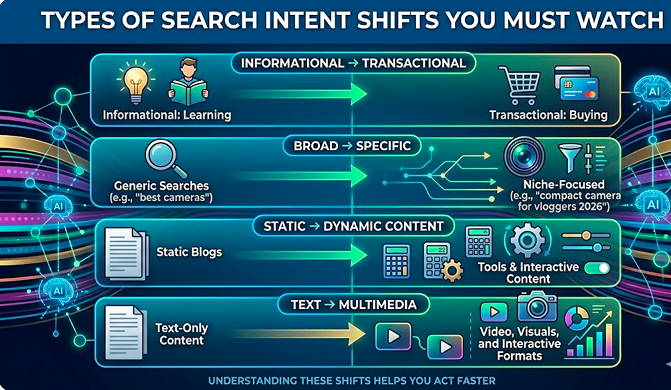
Types of Search Intent Shifts You Must Watch
Understanding the types of shifts helps you act faster.
Informational → Transactional
Users move from learning to buying.
Broad → Specific
Generic searches become niche-focused.
Static → Dynamic Content
Users prefer tools, calculators, or interactive content over static blogs.
Text → Multimedia
Video, visuals, and interactive formats start dominating results.
How to Use AI to Stay Ahead?
Predicting search intent shifts with AI isn’t just about detection—it’s about action.
1. Run Regular Content Audits
Use AI tools to scan your content and flag outdated sections. Focus on:
- Statistics older than 1–2 years
- Missing subtopics
- Weak internal linking
2. Monitor SERP Volatility
Track ranking fluctuations. Sudden changes often indicate a shift in intent rather than just competition.
3. Update Content Proactively
Instead of waiting for rankings to drop:
- Add new sections
- Improve depth
- Include recent examples
- Refresh headlines
4. Expand Topic Coverage
AI helps identify related subtopics users now expect. Cover them before competitors do.
5. Optimize for New Formats
If AI detects a rise in video or tool-based results:
- Embed videos
- Add comparison tables
- Create interactive elements
Benefits of Predicting Search Intent Shifts
Using AI to stay ahead offers clear advantages:
- Maintain rankings longer
- Increase organic traffic
- Reduce content decay
- Beat competitors to updates
- Improve user satisfaction
Instead of reacting late, you stay proactive.
Common Mistakes to Avoid
Even with AI, many marketers fall into these traps:
- Updating content without analyzing intent
- Focusing only on keywords, not user needs
- Ignoring SERP changes
- Overlooking competitor improvements
Avoiding these mistakes gives you a major edge.
The Future of Search Intent and AI
Search engines are moving toward deeper personalization and contextual understanding. AI will play a bigger role in predicting:
- Micro-intent shifts
- Real-time behavior changes
- Personalized search experiences
As this evolves, static SEO strategies will become obsolete. Adaptive, AI-driven content will dominate.
Final Thoughts
Predicting search intent shifts with AI is no longer optional—it’s essential. As user expectations evolve, your content must evolve faster.
By leveraging AI insights, monitoring SERPs, and updating content proactively, you can stay relevant, competitive, and consistently visible in search results.