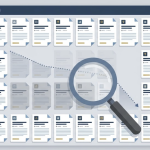


Last year, 73% of B2B websites lost meaningful traffic and not because their content got worse, but because AI Overviews started answering queries before users ever clicked through. The instinctive response in most marketing teams? Publish more. That’s usually the wrong call.
The actual problem is the graveyard inside most content libraries: outdated posts, cannibalizing articles, thin pages quietly draining site authority while competitors have already updated their versions two or three times over. A targeted content audit finds that dead weight and removes or rehabilitates it. Done right, you can recover a significant chunk of lost organic traffic without writing a single new word.
A bad audit, though, is worse than no audit. You end up with a 60-page PDF of disconnected recommendations and zero bandwidth to act on them.
These 10 content audit agencies do it right.
What Does a Content Audit Agency Actually Do?
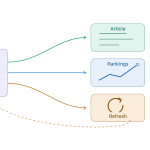
Not the same thing as a technical SEO audit & worth being clear on that. A technical audit catches broken links, slow load times, and indexation errors. A content audit goes deeper into your editorial library: every blog post, landing page, and resource center piece gets a verdict. Keep it. Refresh it. Merge it with something similar. Or cut it.
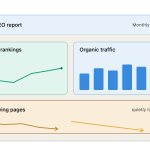
Good agencies build their decision-making on data from Google Search Console, Screaming Frog, Ahrefs, and SEMrush. They’re looking at traffic trends, keyword alignment, engagement signals, duplicate content, and internal linking gaps. The output shouldn’t be a static report. It should be a decision matrix and execution roadmap your team can actually move on.
One benchmark worth keeping in mind: content drops 36% in six months if left unrefreshed, from around 2,500 monthly visits to 1,600. Content decay is the slow leak most teams don’t notice until meaningful ground is already lost. Blog content audit work isn’t glamorous. But that number makes the ROI case pretty quickly.
Why 2026 Is the Right Time to Hire One?
Two things shifted in 2024–2025 that changed how much editorial cleanup matters.
First, Google AI Overviews. 60% of searches end without a click now — the answer lives on the results page and users don’t go further. Thin, duplicative, or off-target pages get punished here. Only content with clear authority signals and tight topical coverage earns a citation.
Second, the December 2025 Core Update hit hard. 77% of sites stayed flat or declined; only 23% gained traffic. The sites that grew weren’t publishing more — they were pruning harder and consolidating overlapping content. If you haven’t yet looked at recovering lost rankings after a core update, now is the right time.
The math holds up. SEO delivers a median 748% ROI when the foundation is solid. SEO content consolidation is one of the highest-leverage ways to rebuild that foundation, because you’re improving pages that already have some authority rather than starting cold.
Top 10 Content Audit Agencies
1. Animalz
Best for: B2B SaaS companies, startups, and VC firms
Animalz doesn’t run generic audits. Their process starts with a strategic content analysis where each page gets a verdict: prune it, revive it, or expand it based on performance data and actual business objectives. Pages draining site authority get flagged for removal. Pages with untapped potential get targeted refresh plans.
The proof is hard to argue with. In one engagement, Animalz audited 44,000 site pages for a publishing company, identified over 1,000 articles for removal, and delivered a 12% traffic increase — around 200,000 additional monthly users, within a month of implementation. Notable clients include Wistia, GoDaddy, Zendesk, and AdEspresso.
If your content strategy needs a reset and you’re tired of vague deliverables, Animalz is a strong first call.
2. Siege Media
Best for: Enterprise companies wanting data-driven content pruning
Siege Media is better known for producing high-ranking content, but their audit work is equally sharp. They dig into large content libraries, identify what’s dragging performance down, and make clear prune-or-refresh calls backed by organic data.
For enterprise SaaS clients, they’ve delivered 10x traffic growth through targeted content revamps, not by publishing more, but by making existing pages perform harder. What makes them genuinely unusual is transparency: they share their audit methodology through podcasts and published articles. You can evaluate their thinking before you sign anything.
3. Brafton
Best for: Marketing teams that want audits with full implementation support
Brafton’s main differentiator is the pipeline they wrap around an audit. They don’t hand you a report and walk away. Brafton identify which articles have real SEO potential but underperform due to gaps, then run them through their proprietary contentmarketing.ai tool to update the copy, followed by an in-house editorial team for proofreading.
They tested the model on their own blog: re-optimizing 84 posts over 11 months produced 53 ranking improvements and 36 Page 1 results, adding an estimated 400+ additional organic visits per month and over 9,000 new backlinks. If your team doesn’t have bandwidth to implement audit findings, Brafton absorbs that execution work.
4. Grow & Convert
Best for: SaaS and service companies with traffic that doesn’t convert
Traffic without conversions is just a vanity metric. Grow & Convert knows this. Their audits are built around one question: does this page actually bring in qualified leads?
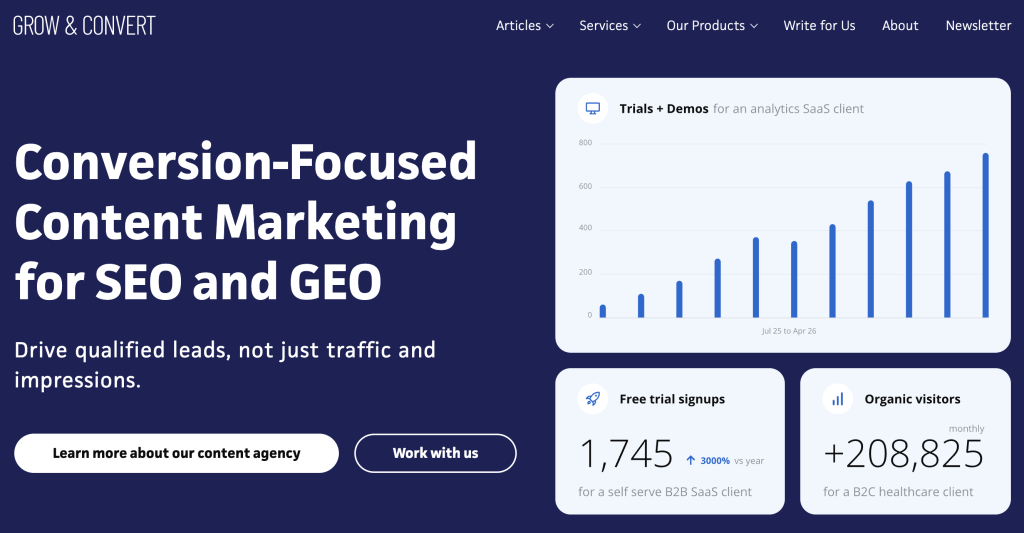
They look at which articles have search potential but weak conversion performance, then reframe or expand them to better match buyer intent. The results they’ve published are specific, conversion rates jumped 66% to 900% across specific bottom-funnel articles for one client, following audit-led updates.
If your analytics show decent organic traffic but signups or demo requests aren’t following, Grow & Convert is built for exactly that gap.
5. Omniscient Digital
Best for: B2B and SaaS companies tying content directly to revenue
Omniscient Digital is strategy-first. Their audits blend search data with business context and they want to understand how your content maps to the buyer journey before making recommendations, not after.
In one documented case, restructuring a client’s content strategy following an Omniscient audit led to 149% organic growth and 550% more signups. None of that came from publishing new posts. It came from consolidating overlapping articles, refreshing outdated ones, and repositioning content toward higher-value keywords.
They also build frameworks to prevent future content decay and so you’re not hiring them again in 18 months for the same problem.
6. RevenueZen
Best for: B2B and SaaS brands needing technical and content audits linked together
RevenueZen separates their technical SEO audit from their content audit deliberately and runs them sequentially. They crawl your site for crawlability issues, indexing problems, and speed barriers first, then layer in content quality and intent alignment.

For companies planning site migrations or platform overhauls, this sequence matters. Starting content revamps on a technically broken foundation wastes time. One migration client reached 260% of their monthly traffic goal using RevenueZen’s staged approach.
7. Brave Bison (formerly Builtvisible)
Best for: Enterprise brands facing large-scale migrations and complex audit needs
Brave Bison absorbed Builtvisible, a well-regarded SEO and content agency with a track record in enterprise-level audits, and the combined capability is notable. They’ve prepared Fortune 500 companies for major site migrations without losing organic visibility and run pruning projects where removing thousands of pages led to stronger architecture and better rankings.
For enterprise organizations where the audit scope runs into tens of thousands of URLs across multiple domains, Brave Bison has the infrastructure to manage that without turning it into a multi-year project.
8. Inflow
Best for: E-commerce brands where every page needs to earn its place
Inflow thinks in revenue per page, which is exactly the right lens for e-commerce. Their content audits identify pages that aren’t driving revenue, refresh articles tied to high-value product keywords, and catch content gaps left behind by platform migrations.
The results they’ve published are specific. A single targeted refresh boosted one article by 268% in clicks and 176% in impressions. Their pruning work has also unlocked meaningful traffic and revenue gains by eliminating content bloat that was holding back category and product pages and one of the most common hidden problems in e-commerce SEO.
9. Delante
Best for: International e-commerce and service companies with stagnant traffic
Delante brings something most audit agencies don’t: genuine cross-market experience. They’ve optimized content across more than 500 websites in 29 markets, which means their process accounts for multilingual keyword alignment, regional search intent, and cross-border SEO nuances that single-market agencies miss.
If your site serves multiple countries and traffic has plateaued despite regular publishing, Delante’s audit methodology, focused on quality, relevance, and international SEO performance and is worth exploring.
10. Scribly Media
Best for: Small B2B teams that need practical, achievable audit advice
Not every company needs an enterprise-grade audit. Scribly Media keeps things proportionate for lean teams. They analyze every page for SEO alignment, buyer journey fit, and audience connection and then deliver clear, actionable recommendations without the 80-page report that no one reads.
Implementation stays realistic, too. For smaller B2B companies that can’t dedicate a full content team to executing findings over six months, Scribly’s recommendations are designed to be actionable by a team of two or three people.
How to Choose the Right Content Audit Agency for You?
The match depends on your specific decay problem, not the agency’s brand recognition.
Struggling with traffic that doesn’t convert into leads? Grow & Convert or Omniscient Digital. Planning a site migration? Start with RevenueZen, or Brave Bison if you’re enterprise-scale. E-commerce brand with bloated category pages? Inflow. Multi-market, multilingual content problems? Delante. Need the audit AND the execution handled for you? Brafton.
Red flags worth watching: agencies that can’t show case studies in your vertical, engagements that end with a PDF report and no execution roadmap, and any partner that starts with deliverables before asking about your business goals.
Green flags: specific discovery questions from the jump, a clear decision matrix (prune / merge / refresh), and willingness to show you the methodology before you sign.
One more option worth knowing: if budget is limited but your content library is large, WordPattern automates the pattern-of-decay detection layer, scanning your Google Search Console data around the clock to flag declining pages before they become traffic disasters. It won’t replace a strategic agency for complex situations, but it handles monitoring and initial triage so your team spends time on decisions, not spreadsheet exports. If you’re also thinking about improving organic search traffic more broadly, that’s a natural next step after the audit phase.
Wrapping Up
Publishing more content into a broken library is like bailing water without patching the leak. The agencies on this list take a different approach: fix what’s already there before adding anything new. Each one suits a different company type and decay problem. Match the agency to your situation, ask for relevant case studies, and make sure the engagement ends with an execution roadmap and not just a document.
FAQs
It varies significantly by scope. Smaller audits from boutique agencies typically start around $1,000–$2,000. Mid-market agencies generally charge $3,000–$10,000 for a full library audit with an execution roadmap. Enterprise engagements covering large sites can run considerably higher. A useful rule: the cost should be proportional to the depth of the decision-making, not just the page count.
For a site with a few hundred pages, expect two to four weeks from kickoff to final recommendations. Larger sites, tens of thousands of pages, typically take six to twelve weeks, especially when technical SEO is audited in parallel. Implementation is a separate phase and can run three to six months depending on how many pages need updates, merges, or removals.
A technical SEO audit covers infrastructure: crawlability, page speed, indexing, Core Web Vitals, structured data. A content audit covers the editorial layer: writing quality, keyword alignment, topical coverage, internal linking strategy, and whether each page actually serves the reader’s intent. Both matter. They’re diagnosing different problems. Some agencies (like RevenueZen) combine both; others specialize in one.
Once a year is a reasonable baseline for most sites. Sites publishing frequently, 3 or more posts per week and benefit from a quarterly review of their fastest-decaying content. Any major Google core update is a useful trigger for at least a partial audit of your highest-traffic pages. The December 2025 update was a reminder of how quickly algorithm changes can reshuffle rankings.