
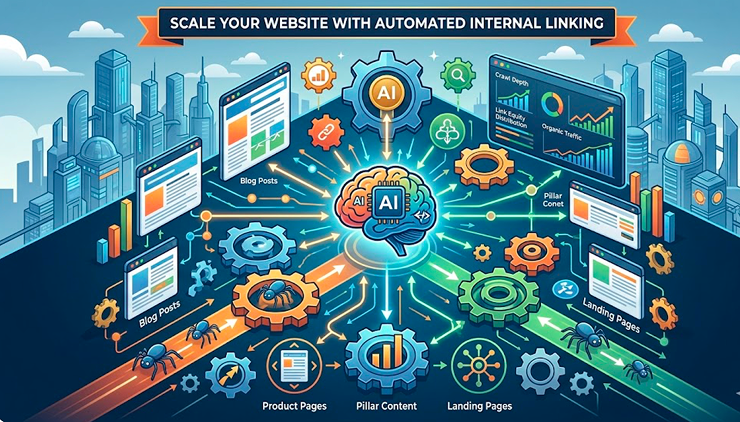
As websites scale, managing internal links manually becomes inefficient and error-prone. That’s where automated internal linking steps in. It helps large websites streamline link placement, improve SEO performance, and maintain a strong site structure without constant manual effort.
Why internal linking is critical for search engine optimization?
Internal links act as pathways that guide search engines through your website. They help crawlers discover pages, understand content relationships, and determine which pages deserve higher rankings.
Without a strong internal linking structure, even high-quality content can remain hidden and underperform in search results. You should also consider adding jumplinks to old long-form posts for better user experience.
The challenge of managing links on large websites
Enterprise websites often contain thousands or even millions of pages. Manually identifying linking opportunities across such scale is not only time-consuming but also inconsistent.
Common challenges include:
- Missing link opportunities
- Broken or outdated links
- Poor anchor text usage
- Orphan pages with no internal links
How automation transforms internal link management?
Automated internal linking uses algorithms and AI to:
- Detect contextual linking opportunities
- Insert links at scale
- Maintain consistency across content
As a result, teams can focus more on strategy while automation handles execution.
Why Internal Linking Is Essential for SEO?
Improving search engine crawlability
Search engines rely on internal links to crawl and index pages efficiently. A well-structured linking system ensures that important pages are discovered quickly and frequently.
Distributing link equity across important pages
Internal links pass authority (link equity) from high-performing pages to others. This helps boost rankings for priority pages that might not have strong backlinks.
When pages are interconnected around a central topic, they form content clusters. This signals expertise and improves rankings for related keywords.
Internal Linking Challenges for Enterprise Websites
Managing thousands of pages and blog posts
Large websites constantly publish new content. Keeping internal links updated across all pages becomes nearly impossible without automation.
Identifying relevant linking opportunities manually
Finding contextual links requires deep content analysis. Doing this manually leads to missed opportunities and inconsistent linking.
Keeping links updated as content grows
As new pages are added, older content often becomes outdated. Without automation, internal linking structures quickly lose effectiveness.
What Is Automated Internal Linking?
Definition of internal linking automation
Automated internal linking refers to the use of tools, scripts, or AI systems to automatically identify and insert internal links within website content.
How algorithms detect contextual linking opportunities
Modern systems analyze:
- Keywords and semantic relevance
- Content similarity
- Topic relationships
They then match anchor text with the most relevant destination pages.
The role of AI in scalable internal linking
AI enhances automation by understanding context, not just keywords. It ensures links feel natural, improving both SEO and user experience.
Core Components of an Automated Internal Linking System
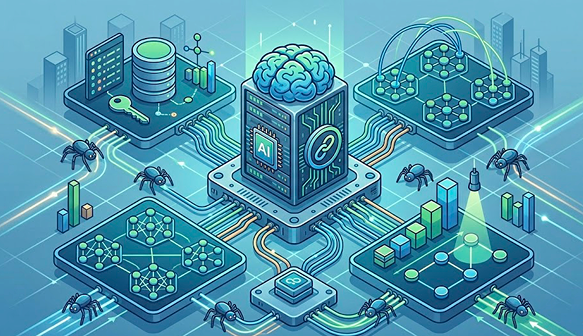
Keyword and anchor text mapping
A strong system maps target keywords to specific URLs. This ensures consistent anchor text usage across the website.
Content relationship graphs and topic clustering
Automation tools create content maps that show how pages are related. These clusters help search engines understand your site’s structure.
Not all pages are equal. Automation systems prioritize linking to high-value pages, such as:
- Conversion pages
- Pillar content
- High-ranking URLs
Five Proven Automated Internal Linking Strategies
Link supporting articles to a central pillar page. This reinforces your authority on a subject and improves rankings.
Contextual anchor text detection within content
Use automation to identify natural anchor text opportunities within existing content instead of forcing links.
Leverage high-traffic pages to pass authority to underperforming but important pages.
Fresh content link injection into older posts
Whenever new content is published, automation can insert links into older relevant articles—keeping your content ecosystem updated.
Orphan page discovery and link recovery
Automated tools can detect pages with no internal links and connect them back into your site structure.
Tools That Enable Automated Internal Linking
AI-powered SEO automation platforms
These platforms analyze your entire site and automatically suggest or insert internal links based on relevance and SEO value.
Internal linking plugins for CMS platforms
Many CMS platforms offer plugins that simplify internal linking automation without requiring technical expertise.
Custom scripts and automation workflows
For enterprise teams, custom-built solutions provide greater control and flexibility over linking rules and logic.
Step-by-Step Framework for Enterprise Internal Link Automation
Step 1: Create topic clusters and pillar pages
Start by organizing your content into clusters. Each cluster should revolve around a core topic and link back to a pillar page.
Step 2: Build a database of target keywords and anchor texts
Map keywords to URLs. This ensures consistency and prevents keyword cannibalization.
Step 3: Define rules for link placement and frequency
Set clear guidelines, such as:
- Maximum links per page
- Anchor text variation rules
- Priority page targeting
Step 4: Automate contextual link placement at scale
Deploy your automation system to insert links across your site. Monitor performance and refine rules as needed.
How to Measure Internal Linking Performance?
Improvements in crawl depth and index coverage
Track how quickly search engines discover and index your pages after implementing automation.
Ranking improvements for priority pages
Monitor keyword rankings for pages receiving new internal links.
Organic traffic growth from improved link distribution
Better internal linking often leads to increased visibility and higher organic traffic.
Internal Linking Best Practices for Large Websites
Use natural and varied anchor text
Avoid repetitive anchor text. Instead, use variations that match the context of the content.
Avoid excessive linking on a single page
Too many links can dilute value and harm user experience.
Continuously update links as new content is published
Automation helps, but regular audits ensure your strategy remains effective.
FAQs
How many internal links should a page have for SEO?
There’s no fixed number, but focus on relevance and user experience. Quality matters more than quantity.
Can automated internal linking hurt SEO rankings?
Yes—if overused or poorly configured. Excessive or irrelevant links can appear spammy and harm rankings.
What anchor text strategy works best for internal links?
Use descriptive, keyword-relevant, and natural-sounding anchor text to maximize SEO impact.
Are AI tools reliable for internal link optimization?
Yes, when used correctly. However, combining automation with human oversight delivers the best results.
Conclusion
As enterprise websites grow, managing internal links manually becomes inefficient and inconsistent. Over time, this approach not only slows down workflows but also leads to missed opportunities and uneven link distribution. Automated internal linking solves this by ensuring links are placed accurately, updated regularly, and aligned with overall SEO goals. This allows teams to scale their efforts while maintaining consistency and performance.
A sustainable internal linking strategy goes beyond automation alone. The most effective approach blends technology with clear direction and ongoing refinement. Smart automation handles scale and execution, a well-defined SEO strategy sets priorities, and continuous optimization ensures the system evolves as new content is added. Together, this balance creates a strong, future-ready internal linking structure that supports long-term organic growth.