
For years, businesses optimized their websites for search engines by focusing on keywords, backlinks, page speed, and technical SEO. While those fundamentals still matter, the way people discover information is changing rapidly.
Today, users are asking questions directly to AI assistants instead of typing short search queries into Google. Whether it’s ChatGPT, Gemini, Claude, or AI-powered search experiences, people increasingly expect complete answers instead of a list of links.
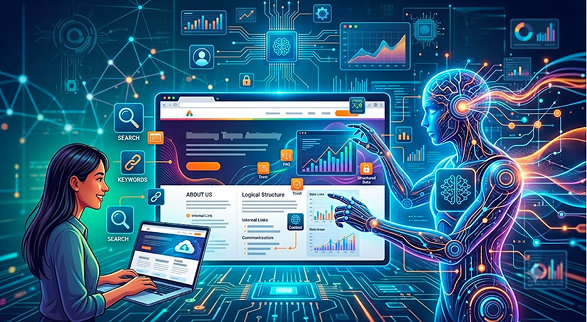
This shift means websites need to be built for two audiences: human visitors and AI systems that interpret, summarize, and recommend content.
The question is no longer, “Can Google crawl my website?” It’s becoming, “Can AI understand my website?”
AI Search Thinks Differently
Traditional search engines primarily ranked pages based on relevance, authority, and technical optimization.
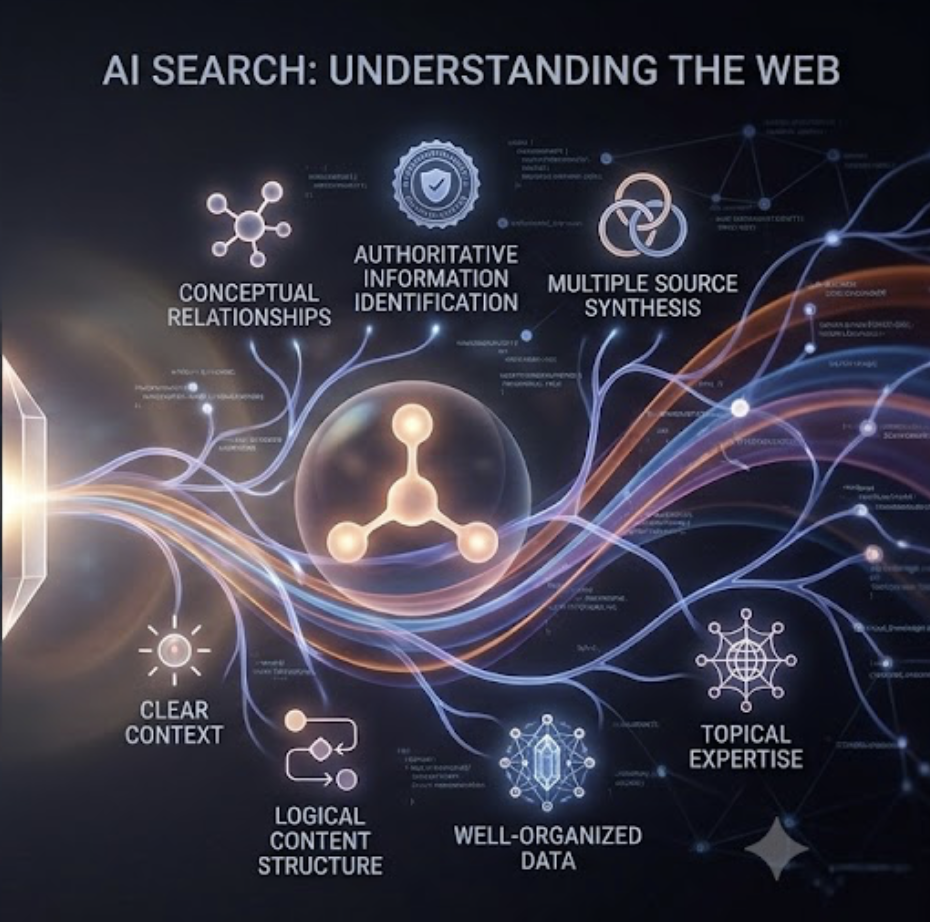
Large Language Models (LLMs) work differently. They attempt to understand relationships between topics, identify trustworthy information, and generate useful answers from multiple sources.
Instead of matching exact keywords, AI looks for:
- Clear context
- Logical content structure
- Authoritative information
- Well-organized data
- Consistent topical expertise
A page stuffed with keywords but offering little value becomes far less useful in an AI-driven search environment.
Structure Matters More Than Ever
One of the biggest improvements businesses can make is organizing information properly.
AI systems process content more effectively when websites include:
- Descriptive headings
- Logical content hierarchy
- Short, informative paragraphs
- Clear navigation
- When every page exists in isolation, AI has a harder time understanding how different topics connect – which is why strengthening internal linking is worth doing deliberately.
When every page exists in isolation, AI has a harder time understanding how different topics connect.
Think of your website as a knowledge hub rather than a collection of independent pages.
Build Topic Authority Instead of Individual Pages
Many companies still create content around isolated keywords.
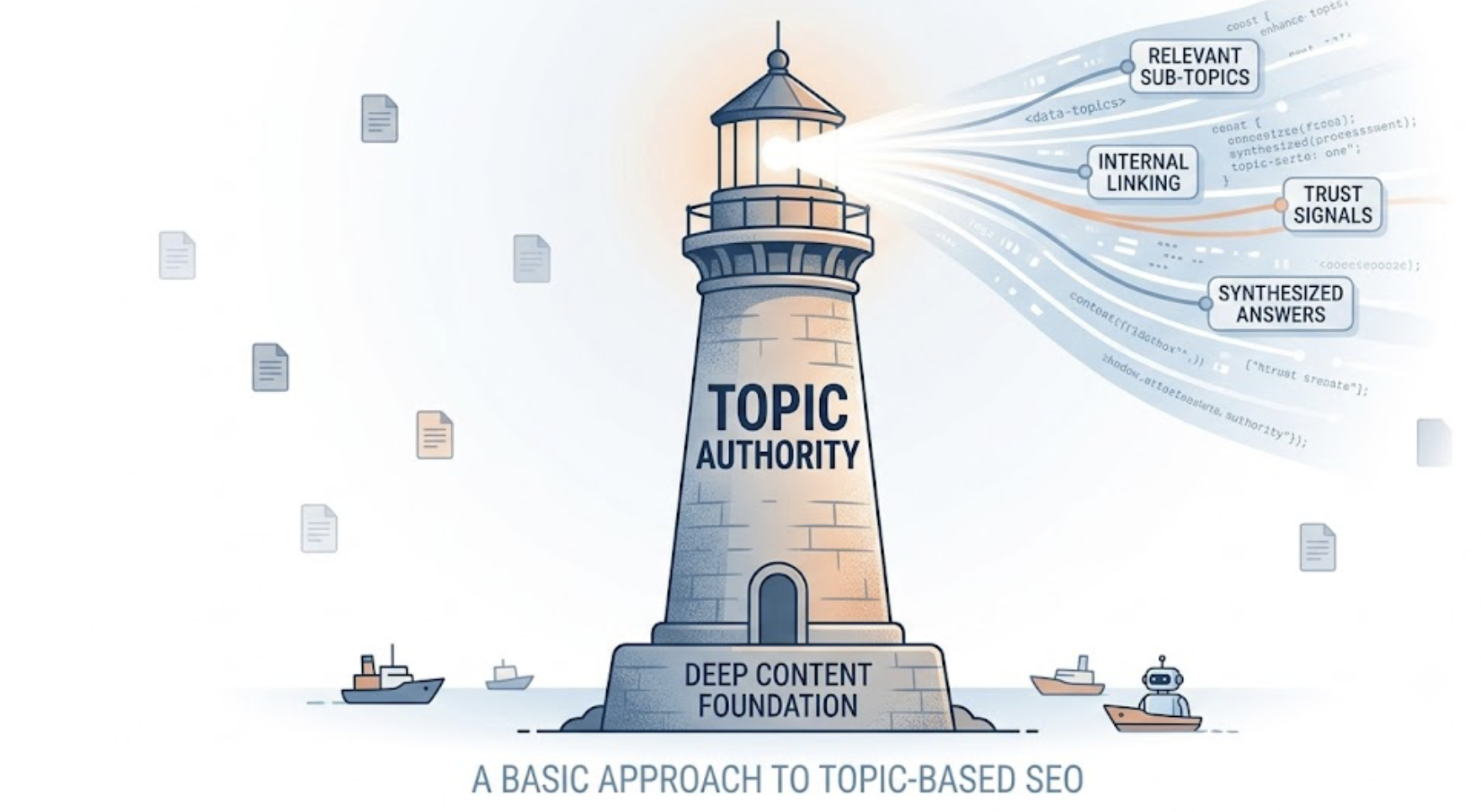
Modern AI rewards businesses that demonstrate expertise across an entire subject.
For example, instead of publishing only one article about cloud migration, an organization could build supporting resources covering:
- Cloud security
- Migration strategies
- Cost optimization
- Infrastructure modernization
- Enterprise integration
- Performance monitoring
Together, these pages signal deep expertise instead of surface-level knowledge.
This approach benefits both traditional SEO and AI-powered search experiences.
Create Content That Answers Real Questions
People rarely search the same way they did five years ago.
Instead of typing:
“Enterprise software”
They now ask:
“How can enterprise software reduce operational costs for manufacturing companies?”
AI search favors content that naturally answers conversational questions.
That means businesses should write in a way that reflects how customers actually speak.
Practical examples, comparisons, step-by-step explanations, and real business scenarios often perform better than generic marketing copy.
Technical Performance Still Plays a Critical Role
Although AI search focuses heavily on understanding information, technical quality remains essential.
Fast-loading websites improve user experience while making it easier for search engines to crawl content efficiently.
Important technical considerations include:
- Mobile responsiveness
- Core Web Vitals optimization
- Secure HTTPS implementation
- Structured data
- Clean HTML architecture
- XML sitemaps
- Accessible navigation
A technically strong website provides the foundation that allows great content to perform.
Don’t Ignore Structured Data
Schema markup has become increasingly valuable.
Structured data helps machines identify:
- Organizations
- Products
- Services
- Reviews
- FAQs
- Articles
- Events
- Authors
While structured data doesn’t guarantee higher rankings, it provides additional context that helps AI systems interpret your content more accurately.
Build Websites That Support Future Integrations
Modern websites rarely operate independently.
Businesses increasingly connect their websites with:
- CRM platforms
- Marketing automation
- Customer support systems
- Analytics platforms
- ERP solutions
- AI-powered chat assistants
As AI adoption grows, websites need flexible architectures capable of integrating with emerging technologies rather than requiring complete rebuilds every few years. Businesses that hire salesforce developer talent can further streamline AI integration, optimize performance, and future-proof their digital experiences.
Organizations investing in custom software development often benefit from this flexibility because their digital ecosystem is designed around long-term business requirements instead of short-term functionality.
Security Builds Trust, for Users and AI
Trust is becoming one of the most important signals online.
Websites handling customer information should prioritize:
- Secure authentication
- Encrypted communication
- Regular security updates
- Privacy compliance
- Reliable hosting
Strong cybersecurity practices don’t just protect businesses; they also contribute to long-term credibility and reliability. Utilizing dedicated Cybersecurity Services helps build a resilient infrastructure against modern digital threats. As AI systems continue emphasizing trustworthy sources, secure and well-maintained websites are likely to remain at an advantage.
As AI systems continue emphasizing trustworthy sources, secure and well-maintained websites are likely to remain at an advantage.
Industry Expertise Creates Better AI Visibility
Generic websites often struggle to stand out.
Industry-specific knowledge makes content significantly more valuable.
Whether serving:
- Healthcare
- FinTech
- Logistics
- Manufacturing
- Real Estate
- E-commerce
Businesses should create resources that solve problems unique to their audience.
AI models increasingly recognize depth of expertise rather than broad, generalized content.
Data Will Drive Continuous Improvement
Launching a website is only the beginning.
Businesses should continuously monitor:
- User behavior
- Search intent changes
- Engagement metrics
- Conversion paths
- Content performance
Using data analytics allows organizations to identify which information users actually value and where content gaps exist.
This iterative approach helps websites remain relevant as AI search continues to evolve.
AI-Ready Websites Need AI-Ready Development
As websites become more intelligent, the underlying technology must evolve as well.
Modern platforms increasingly incorporate:
- AI-powered search experiences
- Personalized recommendations
- Intelligent chat interfaces
- Automation workflows
- Predictive analytics
Supporting these capabilities often requires scalable architectures, cloud-native infrastructure, and well-planned enterprise software development practices.
Businesses that prepare today will be far better positioned to adopt tomorrow’s AI innovations without major redevelopment efforts.
Final Thoughts
AI search isn’t replacing traditional SEO; it’s expanding it.
Businesses that focus only on rankings may miss the larger opportunity: becoming a trusted source that both people and AI systems rely on.
That requires websites built around clarity, expertise, performance, security, and meaningful user experiences.
Working with an experienced web development company that understands modern architecture, scalable technology, AI integration, and search best practices can help organizations build digital platforms that remain competitive as search continues to evolve.
The future belongs to websites that aren’t simply optimized for algorithms; they’re designed to communicate knowledge effectively, adapt to changing technologies, and deliver lasting value to every visitor, whether human or AI.