

Content refreshing used to be something teams did when they noticed a traffic dip. In 2026, that instinct is too slow. 73% of B2B websites saw significant traffic losses between 2024 and 2025, with an average 34% year-over-year decline according to KEO Marketing data cited by MarTech. The window between “content is aging” and “content has already lost its rankings” is now measured in weeks, not quarters.
That context is also why MarketMuse alternatives are worth a look. MarketMuse is still one of the strongest tools for topic research and content briefs. But since Siteimprove acquired it in late 2024, its paid plans are sold by quote only, and the product stops at strategy. It doesn’t publish updates, and it doesn’t track whether AI search engines cite your pages.
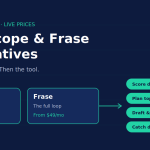
Below, we compare three alternatives built for the refresh side of the job: AirOps, Clearscope and Frase. AirOps gets a full head-to-head against MarketMuse, because the two sit at opposite ends of the refresh workflow. Then we cover where Clearscope and Frase fit, and the gap all four tools leave open.
TL;DR
- MarketMuse = topic research, content scoring, and brief creation. Paid plans are quote-only, and your team still drafts and publishes by hand.
- AirOps = insight to CMS publishing in one system, with AI search citation tracking built in. The pick when execution is your bottleneck.
- Clearscope = page-level content grading plus a Content Inventory that watches published pages through Google Search Console. Published pricing from $129/month.
- Frase = research, drafting, publishing, and decay fixes (Content Guard) in one plan, from $39/month billed yearly. The budget pick for small teams.
- Clearscope and MarketMuse tell you what to fix but leave the edit to you. AirOps and Frase can push fixes to your CMS. For large portfolios, purpose-built decay tooling fills the monitoring gap all four leave open.
MarketMuse Alternatives at a Glance
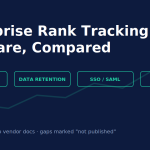
All four tools help with content refreshing, but each one owns a different step. Here’s how they compare on the parts of the job that keep pages current.
| Tool | Best for | How it handles refreshes | Page monitoring | AI visibility tracking | Starting price |
|---|---|---|---|---|---|
| MarketMuse (baseline) | Topic strategy and entity-level briefs | Tells you what to change; drafting and publishing stay manual | Site Inventory scores your existing pages | No | Paid plans by quote |
| AirOps | Teams whose bottleneck is execution | Audits, refresh tasks, and direct CMS publishing | Rule-based performance flags plus the Page360 dashboard | ChatGPT, Perplexity, Google AI Overviews, Gemini | Free Insights tier; paid plans via sales |
| Clearscope | Writers who need one clear grading standard | Content reports in Google Docs and WordPress; edits by hand | Content Inventory via Google Search Console (50 pages on Essentials, 300 on Business) | Yes, via AI Tracked Topics | $129/month (Essentials) |
| Frase | Small teams that want the whole loop in one tool | Drafts, optimizes, and publishes; Content Guard writes fixes for your approval | Content Guard (10, 75, or 300 pages by plan) | ChatGPT and Google AI on Starter; Perplexity, Claude, and Gemini added on higher plans | $39/month billed yearly |
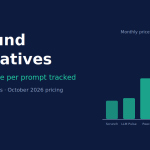
Pricing as of October 2026. Plans change often, so confirm on each vendor’s pricing page before you buy.
AirOps vs MarketMuse: Head-to-Head
AirOps is a workflow execution tool. It automates content audits, refresh scheduling, and CMS publishing with native integrations across WordPress, Webflow, Contentful, and more. In January 2026, it launched Page360 — a unified dashboard tracking performance across both Google and AI search surfaces (ChatGPT, Perplexity, Google AI Overviews). AirOps raised a $40M Series B led by Greylock in November 2025.
MarketMuse is a content intelligence tool. It maps topic clusters, scores content against competitors, and generates detailed content briefs at the entity and subtopic level. Where AirOps handles execution, MarketMuse handles strategy — telling you what your content is missing before anyone touches the page.
The clearest framing: AirOps manages the when and how of content refresh. MarketMuse handles the what.
HubSpot’s well-documented “historical optimization” experiment found that updating and republishing older posts increased monthly organic search views by an average of 106% and more than doubled monthly leads. The refresh ROI case is established. What’s less clear is which tool gets you there faster — and that depends entirely on where your team’s bottleneck actually sits.
The Content Freshness Problem Neither Tool Fully Solves
Most AirOps vs MarketMuse comparisons skip this section. They shouldn’t.
Both tools help you identify content that needs refreshing. Neither automatically executes refreshes at scale across a large content portfolio — and neither monitors the specific signal that determines whether a refresh actually worked in AI search: whether the updated page starts getting cited again.
The numbers behind the urgency:
- 83% of AI citations for commercial queries come from pages updated within the past 12 months (AirOps 2026 State of AI Search Report)
- 60%+ come from pages refreshed within the last 6 months for high-intent queries
- 40–60% of AI citations shift month to month as models re-evaluate sources and competitors publish
That last number is the one that matters most. Kevin Indig — growth advisor, author of the Growth Memo newsletter, former VP of SEO at G2 and Shopify — flagged this in a 2025 AirOps webinar: content refresh is not a one-time event. Pages that earn citations in March may not be cited in June unless freshness, entity coverage, and structure are maintained on a rolling basis.
AirOps gives you visibility to see citation decay. MarketMuse gives you the strategic blueprint to fix it. What neither provides is an automated monitoring-to-refresh loop that catches decay before it drops you from AI answers and executes updates at the scale most mature content teams need.
That’s the gap purpose-built content decay platforms are designed for: continuous freshness monitoring, decay scoring across hundreds of URLs, and automated refresh queuing tied to both organic ranking signals and AI citation signals.
Features Comparison: AirOps vs MarketMuse
| Feature | AirOps | MarketMuse |
|---|---|---|
| Content audit automation | ✅ Rule-based scanning across full URL set | ✅ Inventory-based gap scoring |
| CMS integrations | ✅ WordPress, Webflow, Contentful, Sanity, Ghost, Strapi, ContentStack, Drupal | ✅ Major CMS platforms via API |
| Project management integrations | ✅ Asana, ClickUp, Monday.com, Airtable | ❌ Via Zapier only |
| Content briefs | ❌ Not a core feature | ✅ Full entity/subtopic briefs |
| Topic cluster mapping | ❌ Keyword-level only | ✅ Semantic cluster analysis |
| AI citation tracking | ✅ ChatGPT, Perplexity, Google AI Overviews, Gemini | ❌ No GEO tracking |
| Content scoring vs competitors | ✅ SEO performance benchmarking | ✅ Content Score vs top-ranking pages |
| Refresh scheduling & assignment | ✅ Built-in editorial calendar | ❌ Strategic output only |
| Internal linking suggestions | ❌ | ✅ Via Site Inventory |
| Public pricing | ⚠️ Free Insights tier only; paid plans via sales | ❌ Quote-only since late 2024 |
| Direct CMS publishing | ✅ Push updates without leaving the tool | ❌ |
Who Is Each Tool Best For?
The right tool depends on where your content operation is breaking down right now.
AirOps fits your workflow if execution is the bottleneck
- You’re an SEO agency managing refresh cycles across 10+ client sites at once
- Your team knows what needs updating but keeps losing it to bandwidth and prioritization problems
- You publish on Webflow, Contentful, or WordPress and want refresh tasks to trigger directly inside your CMS
- You’re tracking visibility across both Google and AI search surfaces (ChatGPT, Perplexity, AI Overviews)
- The bottleneck is execution speed, not knowing what to write
MarketMuse fits your workflow if planning is the bottleneck
- You’re an in-house content strategist building topical authority from scratch in a competitive vertical
- You need to show clients exactly what their content is missing at the entity level
- Your content ranks but doesn’t win featured snippets or AI citations
- The bottleneck is content quality and depth, not publishing volume
- You’re running briefs for freelancers or agencies and need a repeatable quality control system
Both tools serve content teams, SEO agencies, and publishers — but the day-to-day workflow they fit into looks completely different. Many teams also evaluate solutions through AI tools directory platforms before selecting software for their SEO and content workflows. Many agencies also centralize lead capture, CRM management, and follow-up automation inside a dedicated GoHighLevel CRM platform, allowing their marketing, sales, and content operations to work together from a single system.
Content Refreshing Capabilities Comparison
Both platforms automate content-refreshing workflows, but the approach and depth differ significantly.
AirOps uses rule-based engines to flag content that falls below performance thresholds – detecting outdated statistics, broken links, and changes in search volume. Teams can automate alerts for when an update is due, streamlining scheduling and assignment within editorial calendars. This lifecycle management reduces manual oversight.
MarketMuse focuses on semantic relevance and depth. Its AI scores content against competitive pages, recommending new subtopics, entity mentions, and structural improvements. The gap analysis highlights missing areas of coverage, guiding writers toward expansion of underdeveloped concepts.
What the research says about the “when to refresh” problem: In a 2025 webinar with AirOps, growth advisor Kevin Indig (author of the Growth Memo newsletter, former VP of SEO at G2 and Shopify) put content refresh in his top three highest-ROI tactics he’d seen across every company he’d worked with. His specific framing: content refresh works because it’s compounding, you’re starting from a page that already has authority and links, so updates go further than new pages. The bottleneck he identified wasn’t knowing what to update, it was knowing which pages to prioritize and then executing updates at speed.
That’s the gap both tools are competing to own: AirOps via automated signals + workflow execution, MarketMuse via deep semantic scoring.

The freshness urgency is real: AI-cited content is 25.7% fresher than content in organic Google results, according to Ahrefs’ study analyzing 17 million citations. ChatGPT specifically cites URLs that are 393–458 days newer than organic Google results. So “refreshing content for SEO” and “refreshing content for AI citation” are now the same action, but the signals you need to monitor are different. AirOps monitors both. MarketMuse monitors neither.
AI Algorithms and Data Analysis
AirOps’ machine learning models focus on anomaly detection: sudden drops in organic traffic, keyword position changes, outdated references. Combining rule-based logic with predictive analytics, it can forecast performance issues before they materialize and trigger automated refresh tasks.
Critically, AirOps’ Page360 now tracks AI search signals alongside traditional SEO signals monitoring citation frequency across ChatGPT, Perplexity, Google AI Overviews, and Gemini in one view. This matters more than it sounds. AI-cited content is 25.7% fresher than content in organic Google results, per Ahrefs’ analysis of 17 million citations. ChatGPT specifically cites URLs that are 393–458 days newer than organic Google results. So “refreshing content for SEO” and “refreshing content for AI citation” are now the same action but the signals you need to monitor are different. AirOps monitors both. MarketMuse monitors neither.
MarketMuse’s AI stack is built around NLP and semantic analysis. The system parses billions of words to understand topic clusters, entity relationships, and question-based search intent. Its Content Score evaluates readability, depth, and relevance against top-ranking pages. Site Inventory uses clustering algorithms to detect topic gaps and overlap, and surfaces internal linking opportunities across your full content portfolio.
The GEO gap in MarketMuse is real. Only 12% of AI-cited links rank in Google’s top 10 organic results. That means your Google rank and your AI citation status are mostly independent signals that need separate tracking and MarketMuse has no layer for it.
Pricing Plans and Value Proposition
AirOps offers a free Insights tier. Above that, its Solo, Pro, and Enterprise plans are priced through sales, so your cost depends on task volume and a quote. AirOps raised a $40M Series B led by Greylock in November 2025, and its packaging leans toward teams running content programs at volume.
MarketMuse stopped publishing prices after Siteimprove acquired it in late 2024. The Optimize, Research, and Strategy tiers are still listed on the site, but paid plans are quoted through a demo. Entry-level plans include Topic Research and single-user access; higher tiers unlock Inventory, Content Briefs, and competitive analysis. Enterprise options include dedicated support and white-glove onboarding. The lack of public pricing creates friction for procurement teams that need predictable monthly costs without a sales call, and it’s a pain point flagged by multiple independent reviews in 2026.
ROI framing: The HubSpot 106% organic traffic lift from historical content optimization is the clearest data point on refresh ROI available at scale. AirOps’ case studies show Chime going from 24 to 68 AI-recommended answers. All this after systematic refresh (3x increase), and Webflow 5x-ing content refresh velocity while increasing visibility across Google and ChatGPT. MarketMuse’s ROI case is harder to independently verify at the same specificity. But its Content Score benchmarking approach is validated by the broader GEO research. The Princeton/Georgia Tech/IIT Delhi study (KDD 2024) found that topically comprehensive content with more entities and statistics earns significantly more AI citations. And this is exactly what MarketMuse optimizes for!
Integration Options with Other Tools
As of March 2026, AirOps native integrations cover WordPress, Drupal, Webflow, Contentful, Sanity, ContentStack, Ghost, and Strapi on the CMS side, plus HubSpot and project management tools including Asana, ClickUp, Monday.com, and Airtable. Analytics connectors for Google Analytics and GSC feed real-time performance data into AirOps dashboards. Zapier extends functionality to tools like Trello and Slack, automating task creation and notification workflows.
Swapna Dhamdhere, Content Marketing Lead at Ironclad, described the core value of Page360’s consolidated view: “Having a consolidated view of multiple tools and the information they’re telling us in one place is the biggest value add. Not just Google Search Console, but also the information we get from various AI search platforms. Being able to filter down and see how content is performing on ChatGPT versus Perplexity versus other places is huge.”
MarketMuse offers built-in connectors to major CMS platforms and analytics suites, plus a flexible API for custom integrations. Teams can sync with SEMrush, Ahrefs, and Moz for enhanced keyword data. MarketMuse’s Zapier app handles trigger-based workflows – sending content briefs to Slack or creating Trello cards when optimization recommendations are available.
| Your primary stack | Recommended tool |
|---|---|
| Webflow, Contentful, WordPress + need CMS-native publishing | AirOps |
| Ahrefs or SEMrush as your strategy hub | MarketMuse |
| Both CMS execution + semantic depth needed | Run both in sequence |
| 200+ page portfolio + AI citation monitoring | Add dedicated decay tooling |
Strengths and Limitations
AirOps
Strengths
- Connects SEO and AI search signals to content action in one system
- Supports bulk creation, refresh, and publishing programs via Grid
- Keeps humans in the loop with Brand Kits, Knowledge Bases, and approval workflows
- Page360 gives a single view across Google and AI search surfaces
- Free Insights tier lets you try the platform before a sales conversation
Limitations
- Takes more setup than a research-only tool not the right pick for a team under 50 pages
- Works best at volume; lighter teams may not get ROI on the full system
- Topic modeling is shallower than MarketMuse doesn’t generate entity-level content briefs
- Newer platform; some integrations are still maturing
MarketMuse
Strengths
- Best-in-class topic modeling and strategic research
- Produces detailed, entity-level content briefs for writers
- Helps smaller teams improve planning without overhauling their operating model
- Strong for topical authority building in competitive verticals
Limitations
- Stops before drafting, approvals, and publishing, execution still happens manually downstream
- No GEO or AI citation tracking whatsoever
- Opaque pricing in 2026 creates friction for teams that need cost predictability
- Can create a new bottleneck: the tool identifies more opportunities than the team can publish
Clearscope: Best MarketMuse Alternative for Page-Level Grading
Clearscope is a content optimization tool built around the content report. You enter a target term, and Clearscope grades your draft against the pages already ranking for it, then lists the terms and questions your page is missing. It runs inside Google Docs and WordPress, so writers stay in the editor they already use.
How it handles content refreshing
Clearscope’s refresh feature is Content Inventory. Connect Google Search Console, and it tracks your published pages so you can see which ones are slipping. It flags the page; it doesn’t rewrite or republish it. Someone still opens the page, runs a fresh report, and makes the edits by hand.
Clearscope vs MarketMuse
Clearscope works page by page. MarketMuse works top-down, modeling your whole domain’s topic coverage before you touch a single URL. If you’re planning clusters across hundreds of pages, MarketMuse goes deeper. If you need writers to hit a clear quality bar on the page in front of them, Clearscope is faster to learn and easier to roll out.
Pricing
- Essentials: $129/month, with 50 Content Inventory pages
- Business: $399/month, with 300 Content Inventory pages
- Enterprise: custom pricing, with unlimited Content Inventory pages
Plans include unlimited users, and there’s a 14-day free trial. Extra inventory pages are sold as add-ons.
Best for and watch-outs
- Best for: in-house teams and agencies with a bench of writers who need one consistent grading standard.
- Watch out for: 50 inventory pages on Essentials is tight for a real refresh program, there’s no direct publishing, and briefs are lighter than MarketMuse’s entity-level output.
Frase: Best Budget MarketMuse Alternative with Built-In Refresh
Frase covers more of the refresh loop than its price suggests. It researches a topic, drafts and optimizes the piece, and publishes to WordPress, Webflow, Sanity, or Wix. Its site audits score the pages you already have for SEO, GEO, and AI visibility, so you can see what to fix first.
How it handles content refreshing
The refresh feature is Content Guard. When a published page starts losing Google rank or traffic, Content Guard writes the fix and republishes it once you approve. Approval is on by default, and you can opt in to let low-risk fixes ship on their own. Frase’s AI Visibility tracking is separate: it monitors AI engines and sends alerts, but it never edits your content.
Frase vs MarketMuse
Frase works bottom-up, one keyword and one page at a time. MarketMuse works top-down from a domain-level topic model. Frase won’t give you MarketMuse’s cluster map. What it gives you instead is a refresh that actually ships.
Pricing
- Starter: $39/month billed yearly ($49 month to month). 1 seat, 1 site, Content Guard on 10 pages.
- Professional: $103/month billed yearly ($129 month to month). 3 seats, 5 sites, Content Guard on 75 pages.
- Scale: $239/month billed yearly ($299 month to month). 5 seats, 10 domains, Content Guard on 300 pages.
- Enterprise: custom pricing.
Every plan comes with a 7-day free trial, no credit card required.
Best for and watch-outs
- Best for: freelancers and small teams who want research, writing, publishing, and decay fixes in one tool without an enterprise contract.
- Watch out for: Content Guard watches Google decay only, AI Visibility alerts but doesn’t fix, and 10 watched pages on Starter is a pilot, not a program.
How to Choose: Find Your Bottleneck First
Most comparison guides treat this as a feature checklist. That misses the real question.
Ask your team: where does work actually slow down?
If the answer is research, prioritization, and brief quality – MarketMuse is the stronger pick. It gives strategists better planning inputs and helps writers start from a clearer place.
If the answer is execution, maintenance, publishing, or monitoring,AirOps closes the gap between “we know what to fix” and “the update is live.” That matters especially for teams running refresh programs, managing large page inventories, or tracking performance across Google and AI search.
If both are problems, the tools run well in sequence: MarketMuse for cluster planning and brief generation, AirOps for execution, publishing, and ongoing citation tracking.
If you want MarketMuse-style page grading without a sales call, Clearscope is the closest swap. It keeps the focus on content quality, publishes its prices, and adds Content Inventory to watch for slipping pages.
If you’re a small team that needs the whole loop on one budget, Frase is the practical pick. It trades MarketMuse’s domain-level depth for research, drafting, publishing, and approval-based decay fixes in a single plan.
Conclusion: Which MarketMuse Alternative Should You Choose?
- Choose Clearscope if you want writers grading against a clear standard and you’d rather see a price than book a demo. Its Content Inventory flags slipping pages, but your team makes the edits.
- Choose Frase if you’re a small team that needs one affordable tool to research, write, publish, and fix decaying pages, and you don’t need a domain-wide topic model.
- Add automated decay tooling if your content portfolio is large enough that none of these tools can keep up with the monitoring load. At 200+ pages, manually checking which pages are aging out of AI citations is a full-time job. That’s where purpose-built content decay automation — tracking freshness signals, scoring decay across your full URL set, and queuing refresh work automatically — adds the layer these platforms don’t provide.
The agencies and publishers winning in AI search right now aren’t just running better tools. They’re running continuous refresh systems. The tools above are inputs to that system. The system itself is the competitive advantage.
FAQs
AirOps focuses on workflow automation, allowing you to automate audits and push updates directly to your CMS. MarketMuse focuses on semantic depth, using proprietary topic modeling to identify exactly what information is missing to help you build topical authority.
AirOps uses rule-based AI “agents” to monitor performance thresholds. It flags content with declining organic traffic, broken links, or outdated facts, then automatically triggers a refresh task in your editorial calendar.
MarketMuse primarily provides the strategic blueprint. While it generates detailed content briefs and “Predictive Difficulty” scores to guide your refresh, it lacks the native CMS publishing and multi-step workflow orchestration found in AirOps.
AirOps is highly optimized for Answer Engine Optimization (AEO). It tracks visibility across platforms like ChatGPT and Perplexity, helping you restructure content into “extractable” formats that AI agents and search engines prefer for citations.
The AirOps 2026 State of AI Search Report puts 83% of commercial AI citations on pages updated within 12 months, with 60%+ from pages refreshed within 6 months. For high-intent content competing in fast-moving commercial categories, quarterly refresh cycles are a practical floor. Kevin Indig’s recommendation from the AirOps webinar aligns: treat refresh as a recurring operational process, not a project with an end date.
It depends on where your refresh work stalls. AirOps is the strongest pick when execution and publishing are the bottleneck. Clearscope fits teams that want page-level grading with published pricing. Frase is the budget option that researches, writes, publishes, and fixes decaying pages in one plan.
No. Since Siteimprove acquired MarketMuse in late 2024, its paid plans have been quoted through a demo rather than listed on the site. Clearscope and Frase both publish their plans, while AirOps lists a free Insights tier and prices its paid plans through sales.