
As search evolves faster than ever, enterprise SEO teams face increasing complexity. Larger websites, global audiences, constant algorithm updates, and AI-driven search results demand structured processes rather than scattered tactics. Without a defined workflow, even the most talented SEO teams struggle to scale. That is why leading brands now rely on a structured enterprise SEO workflow.
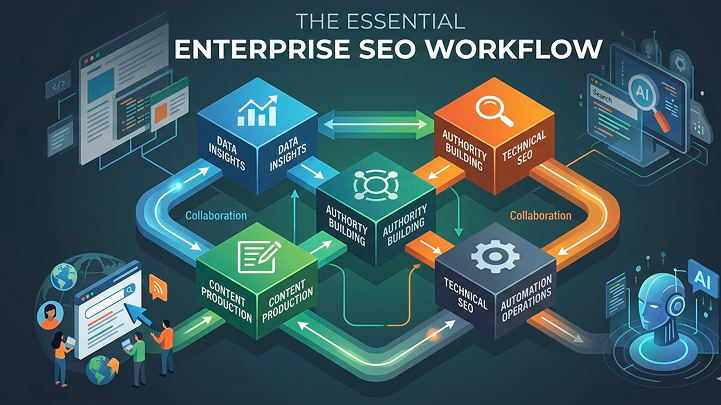
Instead of treating SEO as isolated tasks, successful organizations build systems made of repeatable “workflow blocks.” Each block handles a specific part of the SEO process—from data analysis to technical optimization – ensuring that strategies run smoothly across departments.
In 2026, enterprise SEO will depend heavily on automation, collaboration, and data-driven decision making. Teams that build these five essential workflow blocks can streamline execution, identify opportunities faster, and maintain consistent growth in organic visibility.
Let’s explore the five workflow blocks every enterprise SEO team should implement.
1. Data and Insights Workflow
Every successful enterprise SEO strategy begins with data intelligence. Large organizations generate enormous volumes of SEO data through analytics platforms, crawl reports, search console exports, and customer behavior tracking. Without a structured data workflow, valuable insights remain buried inside scattered dashboards.
A strong data workflow consolidates information into a centralized system. SEO teams typically combine data sources such as:
- search performance data
- keyword rankings
- crawl diagnostics
- customer engagement metrics
- competitor insights
When this data flows into a unified reporting environment, teams can quickly identify opportunities and threats.
Modern enterprise SEO teams increasingly rely on predictive analytics and machine learning models to forecast search trends. These tools analyze historical traffic patterns, seasonality, and competitor activity to predict which content topics will gain momentum.
As a result, SEO leaders can prioritize projects more strategically. Instead of reacting to ranking drops, they proactively create content, optimize pages, and address technical issues before performance declines.
Ultimately, a structured data workflow transforms raw metrics into actionable SEO insights that guide every other workflow block.
2. Content Production and Optimization Workflow
Content remains the driving force behind organic visibility. However, enterprise websites often manage thousands—or even millions—of pages, making content production far more complex than traditional blogging.
An effective enterprise SEO workflow includes a structured content production pipeline. This process ensures that every article, landing page, and resource aligns with search demand and business goals.
The workflow typically begins with keyword and intent research. SEO teams analyze search behavior to identify opportunities across informational, commercial, and transactional queries. Once opportunities are mapped, editorial teams build a content roadmap around topic clusters and pillar pages.
After planning, the workflow moves into production. Writers, editors, and SEO specialists collaborate to create optimized content that satisfies both user intent and search engine guidelines.
Optimization goes far beyond keyword placement. Enterprise SEO teams refine:
- content structure and headings
- semantic keyword coverage
- internal linking strategies
- schema markup
- readability and user engagement signals
Regular content audits also play a crucial role. As search trends change, older content must be refreshed, merged, or removed to maintain topical authority. When done consistently, this workflow ensures that enterprise websites remain relevant, authoritative, and competitive in search results.

3. Authority and Link Acquisition Workflow
Even in 2026, backlinks remain one of the most influential ranking factors. However, enterprise SEO teams can no longer rely on outdated link-building tactics. Instead, they must focus on authority-driven outreach and digital PR strategies. One effective way to implement this strategy is through trusted platforms like My Business Time, offering authority-driven guest posting opportunities.
A modern link acquisition workflow centers on creating high-value linkable assets. These may include original research reports, interactive tools, industry surveys, or data-driven insights that attract natural citations.
Once assets are created, outreach specialists connect with journalists, publishers, and industry influencers. Personalized outreach campaigns help promote valuable resources and generate high-quality editorial backlinks.
Automation also plays an important role. Outreach platforms help teams manage hundreds of relationships while maintaining personalized communication. At the same time, monitoring tools track brand mentions across the web.
When a publication mentions a brand without linking to it, SEO teams can quickly request a backlink. These small opportunities often lead to significant authority gains.
Through consistent digital PR, enterprises build stronger domain authority, improve trust signals, and expand their reach across search ecosystems.
4. Technical SEO and Infrastructure Workflow
Technical SEO forms the foundation of any scalable enterprise SEO strategy. Without strong infrastructure, even the best content and backlink strategies fail to deliver results.
Enterprise websites frequently deal with large-scale technical challenges, including complex site architectures, international domains, dynamic rendering, and massive crawl budgets. Therefore, technical SEO requires a continuous monitoring workflow rather than occasional audits.
The workflow begins with automated crawling and diagnostics. SEO teams regularly analyze:
- crawl errors
- indexation issues
- duplicate content
- broken internal links
- site architecture inefficiencies
Page experience signals also remain critical. Google increasingly prioritizes fast, stable, and mobile-friendly experiences. Enterprise teams therefore monitor page speed, Core Web Vitals, and mobile usability metrics to ensure optimal performance.
Many organizations now integrate SEO checks directly into development pipelines. When developers push updates, automated testing systems evaluate potential SEO issues before deployment. This integration prevents costly mistakes and keeps websites technically optimized at scale.
By maintaining a reliable technical workflow, enterprises create a stable foundation that supports every other SEO initiative.
5. Automation and SEO Operations Workflow
Managing enterprise SEO manually is no longer practical. Large websites require automation and operational efficiencyto keep pace with modern search environments.
In 2026, automation powers many critical SEO tasks. AI-driven systems can cluster keywords, generate meta descriptions, analyze search intent, and identify content gaps within minutes. These capabilities dramatically reduce the time required for routine analysis.
Automation also enhances operational coordination. Enterprise SEO teams often collaborate with developers, marketers, designers, and executives. Without structured processes, communication delays slow down execution.
Workflow management platforms allow teams to convert SEO opportunities into actionable tasks. For example, when analysts identify a technical issue, the system automatically creates a ticket for the development team. Once the fix is deployed, SEO specialists verify the update and track performance improvements.
Automation does not replace human expertise. Instead, it removes repetitive tasks so specialists can focus on strategic planning, innovation, and growth opportunities.
Organizations that invest in automation gain a major advantage: they scale SEO operations efficiently while maintaining high quality across thousands of pages.

Why Enterprise SEO Workflows Matter More in 2026?
Search engines now evaluate websites through hundreds of signals, from content quality to user experience. At the same time, AI-driven search results and evolving algorithms constantly reshape the competitive landscape.
Without a structured workflow, enterprise SEO teams struggle to keep pace with these changes. Disorganized processes lead to missed opportunities, slower implementation, and inconsistent results.
However, organizations that build structured SEO workflows gain several advantages:
- faster decision-making based on data insights
- scalable content production
- consistent technical optimization
- stronger domain authority through digital PR
- efficient collaboration across teams
Together, these benefits create a sustainable framework for long-term organic growth.
Future-Proofing Your Enterprise SEO Strategy
Enterprise SEO in 2026 is no longer about isolated tactics. Success depends on integrated systems that connect data, content, technology, and collaboration.
The five workflow blocks discussed in this guide—data insights, content production, authority building, technical infrastructure, and automation—form the backbone of a modern enterprise SEO workflow. When implemented effectively, these systems transform SEO from a reactive marketing channel into a scalable growth engine.
As search continues to evolve, organizations that invest in structured workflows will remain agile and competitive. By combining advanced technology with strategic processes, enterprise SEO teams can maintain visibility, capture new opportunities, and drive consistent organic growth for years to come.