

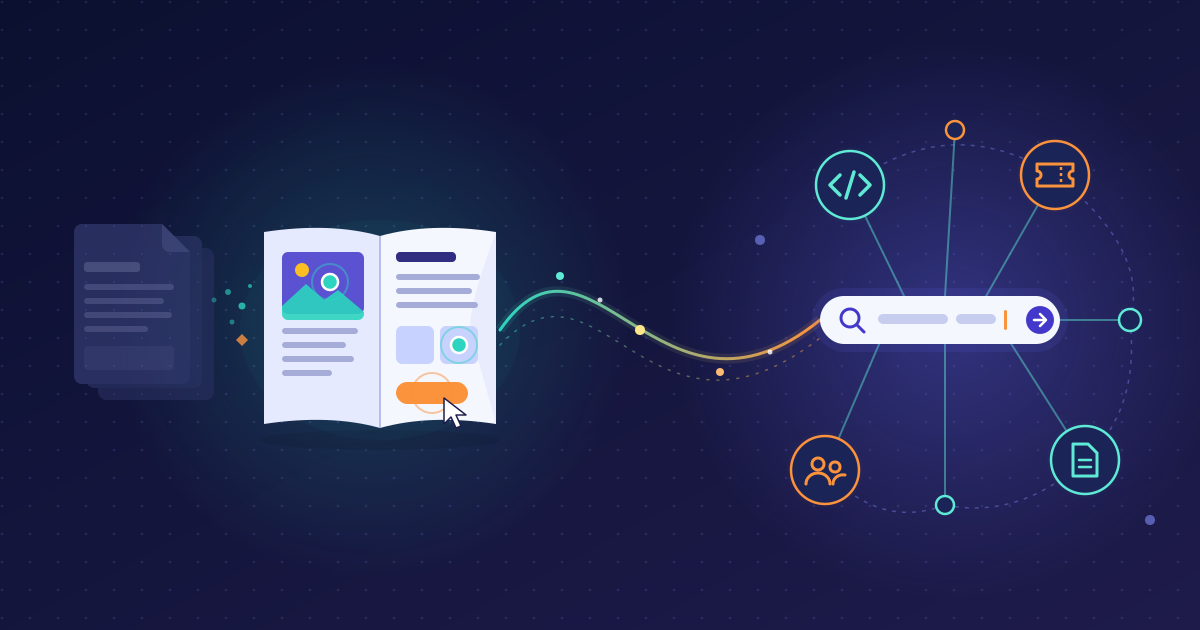
Businesses spend a lot of time creating information: product brochures, service guides, technical documents, reports, and internal notes. But publishing information does not mean people will read it, find what they need, or know what to do next.
Customers may leave a PDF unopened in their inbox. Engineers may spend hours looking for the reason a technical decision was made, even when the answer is buried in an old document or discussion.
Two practical approaches can help. Interactive digital content gives customers a more engaging way to explore information, while AI knowledge management tools help employees search and use information already held by their organization. They solve different problems, but both aim to make information easier to use.
1. Why Static PDFs Can Fall Short
PDFs are convenient for sharing proposals, catalogs, reports, and presentations. They preserve formatting and are familiar to most readers. However, a standard PDF often offers limited insight into how readers use it unless it is supported by separate tracking tools.
A company may send a product catalog to dozens of prospects without knowing which products attracted attention or where readers stopped. The document may contain useful information, but the experience can still feel passive.
Interactive digital publications offer another option. Readers can browse pages in a web browser, follow links, and explore content without handling a traditional attachment. For example, an architecture studio could publish a project portfolio, a retailer could display a seasonal catalog, and a training provider could present a course guide.
ZipFlipbook is one option for turning PDFs into interactive flipbook maker. Depending on the features and setup used, businesses can share publications online, embed them on a website, and support activities such as lead capture or engagement tracking.
Learn more about ZipFlipbook and how it can be used to present digital publications.
2. Turn Useful Content Into a Better Lead Generation Experience
A brochure or guide can do more than explain a product. It can help a potential customer decide whether to take the next step. For example, a software company might publish a guide to choosing project management software and invite interested readers to request a demo or receive a related checklist.
The key is to make the next step relevant to the material. A visitor reading a product catalog may want a quote; someone exploring a service guide may want to book a consultation. Clear calls to action are usually more helpful than asking every reader to fill in a long form.
A simple process can improve the results:
- Create content that answers a real customer question.
- Make it easy to read on mobile and desktop.
- Offer a useful next step, such as a quote, demo, or related resource.
- Use analytics where available to see which pages or links attract attention.
- Update the content based on reader behaviour and feedback.
Track meaningful outcomes rather than views alone. Depending on the campaign, these might include qualified enquiries, completed forms, consultation bookings, or sales. Ask for contact details only when there is a clear reason and explain how the information will be used.
3. Use AI Carefully When Creating Digital Content
AI writing and design tools can help teams prepare outlines, organize product details, draft copy, and generate ideas for digital publications. This can reduce time spent on early production, especially when a team needs to create several versions of similar material.
Still, a quick first draft is not a finished piece of content. Claims should be checked, product details confirmed, and the language edited to fit the audience. Content that sounds generic or contains inaccurate information can weaken trust.
A practical workflow is to:
- Define the audience and the question the content should answer.
- Use AI for a draft or structure, not as a substitute for subject knowledge.
- Check facts, examples, links, and product claims.
- Edit for clarity and remove repetition.
- Publish, measure performance, and revise when needed.
4. Engineering Teams Often Lose Time Searching for Context
Inside technical organizations, information is spread across code repositories, project tickets, incident reports, design documents, and team conversations. Even when records exist, it can be difficult to find the reason behind an old decision.
Imagine an engineer updating a payment service. The current documentation may explain how the service works, but not why a particular design was chosen, which alternatives were rejected, or what happened during an earlier migration.
That missing background is part of an organization’s institutional knowledge: the experience, decisions, constraints, and lessons built up while doing the work. When that knowledge is hard to retrieve, teams may repeat investigations, overlook previous lessons, or depend too heavily on a few experienced employees.
5. AI Knowledge Management Can Help Make Technical Information Easier to Find
AI knowledge management systems aim to help employees find relevant information using ordinary questions rather than relying only on exact keywords or knowing which document to open.
For engineering teams, useful answers may require connections between technical systems, design decisions, incidents, constraints, and the people responsible for particular components. A document search can return a file; a knowledge system should help the employee understand why that file matters to the question.
Prodigent focuses on engineering knowledge, including the relationships between systems, technical decisions, incidents, and the people who understand them. This type of approach can help teams find context that might otherwise remain scattered across different sources.
Explore Prodigent to learn more about its approach to engineering knowledge management.
When assessing an AI knowledge tool, look for practical safeguards and useful capabilities:
- Answers that point back to supporting sources.
- Clear handling of missing, uncertain, or conflicting information.
- Access controls that respect internal permissions.
- A way to keep information current as systems change.
- Options for employees to verify important technical claims.
AI should support an engineer’s judgement, not replace it. For consequential technical changes, employees still need to check the evidence and follow the organization’s review process.
6. What Interactive Content and Knowledge Tools Have in Common
Interactive publications and engineering knowledge systems serve different audiences, but they address a shared problem: information is useful only when people can find it, understand it, and act on it.
A prospective customer may need a clear product comparison before requesting a quote. An engineer may need the history behind a design decision before changing a service. In both cases, simply storing information is not enough.
For customer-facing content, the priority may be readable design, easy navigation, relevant calls to action, and engagement data. For internal knowledge, it may be reliable search, links between related records, source transparency, and clear ownership.
7. How to Decide Where Your Business Should Start
Before adopting a new platform, answer three questions:
Where is information getting stuck? Find out whether customers struggle to explore your content or employees struggle to locate internal knowledge.
What should happen next? A customer may need to request a quote after reading a catalog. An engineer may need to review a previous decision before changing a system. Build the experience around that next action.
How will you measure success? For digital publications, track qualified enquiries, conversions, and engagement where those metrics are available. For knowledge management, examine how quickly employees find reliable answers and whether repeated investigations decline.
Choose measures that reflect actual work. More clicks or faster answers do not automatically mean better outcomes; the information must also be accurate and useful.
Conclusion: Make Information Easier to Use
Businesses do not always need more content. Often, they need a better way to present the information they already have and help people find the context they need.
Interactive digital publications can make customer-facing materials easier to explore and can support lead generation when paired with relevant calls to action. AI knowledge management tools can help engineering teams retrieve technical context and reuse lessons from earlier work.
The right choice depends on the problem: improve the experience for customers, make internal knowledge easier to retrieve, or address both needs with separate tools. Start with a clear use case, protect data, check the quality of the information, and measure whether people can complete their tasks more effectively.